10/30/17

Five Things Learned in Hong Kong


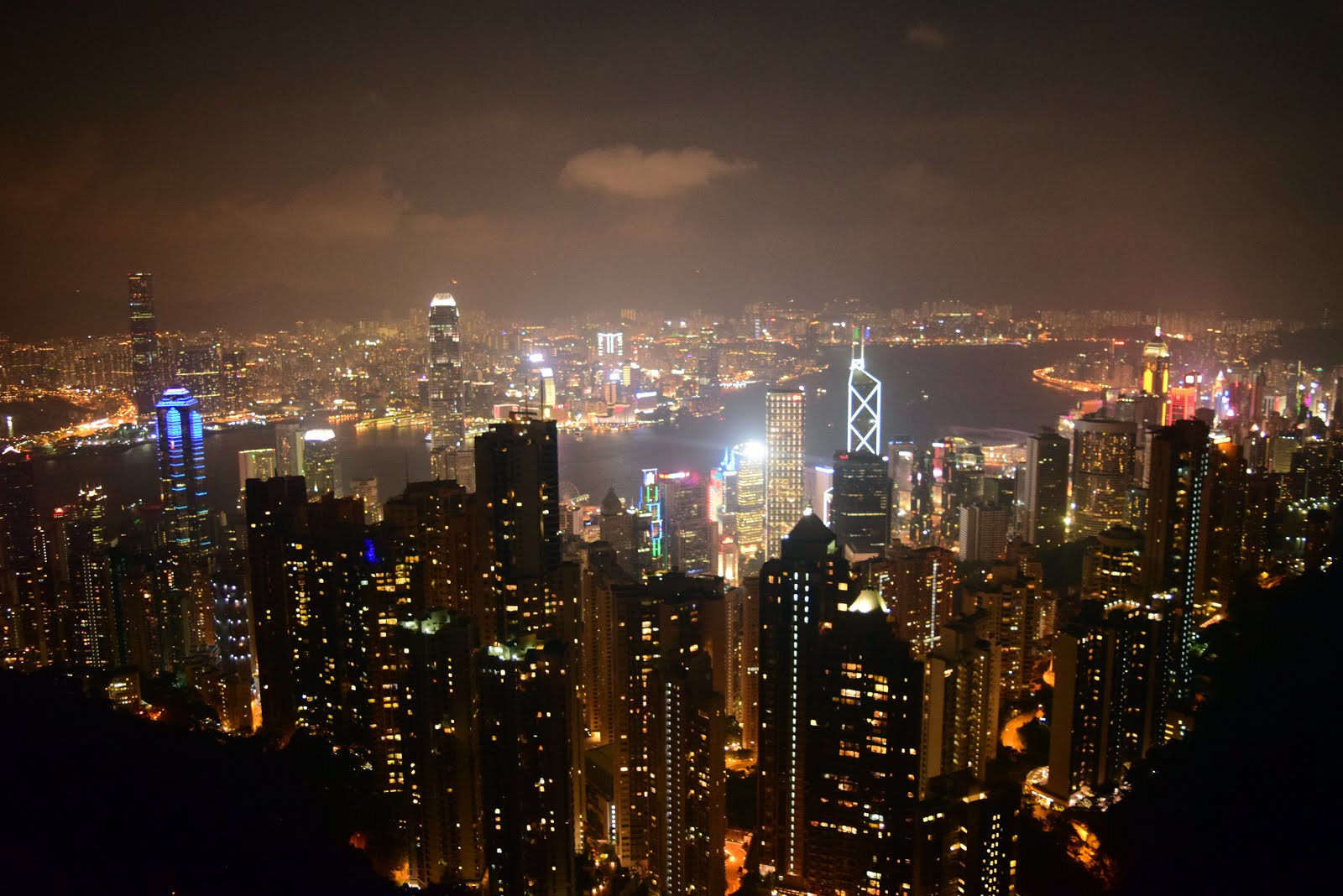
While on the ground, we learned quite a bit about Hong Kong itself. Contrary to our independent habits, on this trip we were closely connected with our host and the locals we met. The result is that we gained more insight than on previous trips about local beliefs and customs. In return for our new found knowledge, we’ve promised to take a pilot river tracing and may have talked a college student into transferring to the states for a year.

1. Feng Shui is an Architectural Term

Hong Kong architecture is weird and intricate for two reasons. The first being that some buildings are designed with “dragon gates” or giant holes in the middle so that the dragons of Hong Kong island can travel freely through them to reach the sea. The second reason comes from the old British sensibility that fresh air is important. In fact, it’s law in Hong Kong that every “inhabited” room has at least one window and apparently bathrooms count. Of course, the result is some very impressive feng shui engineering work. I’m not kidding: Hong Kong architects take feng shui courses and probably invented the mainstream use of the term.


2. Pimping is the Problem

We were also briefed on Hong Kong’s controversial history as a city of drug addicts that the British took from China, so that they’d have a place to sell their opium. Some relics of this shady past still exist. For example, prostitution is legal, but pimping isn’t. Apparently, sex sells and isn’t that bad a business as long as the pimps stay out of it. You’ll see prostitutes in heels at the tourist spots in Kowloon, scanning for someone to make eye contact.

3. The Right to Own Property is NOT a Universal Privilege

Another interesting fact to note is that no one in Hong Kong actually owns property; the government owns it all and allows it to be leased for a maximum of ninety-nine years at a time. Coming from a family farm that’s been handed down for generations, I found this a bit disgusting. The government has no incentive to keep property prices down, so the cost of living is outrageous. Apparently, most two bedroom apartments sleep six and no one wants to work from home, because having an office allows for additional living space. 

4. Land Reclamation Works

Since the government owns everything, land reclamation is a top priority. Despite rising seas levels, over the last twenty years the surface area of Hong Kong has increased, because it’s literally being pulled out of the ocean. I imagine it’s a constant battle, but the Hong Kong government appears to be a vigilant force to be reckoned with and apartment buildings, shopping malls and temples now cover areas of reclaimed shoreline.

5. Visit While You Can

Hong Kong has basically acknowledged itself as an extension of China and locals are not very nice to the mainlanders who come to visit. The MTR and railway systems are littered with advertisements from the mainland and China’s new bullet train even connects to Hong Kong. Apparently, the government pretends not to notice the elephant in the room, but everyone knows it’s an act. At least the notorious firewall and restrictive visa policies aren’t in place yet. A good piece of advice would be to visit while you can though. O! And it’s common knowledge that if someone makes too much noise about China, they will be either kidnapped or deported. Imagine growing up with that in the back of your head.

10/23/17

How to Spend Four Days in Hong Kong


We needed more time. Hong Kong is made up of over 200 islands and lots of things escaped us, like hiking Lantau Peak, exploring Lamma Island, cliff jumping at Sheung Luk, swimming at Tai O infinity pool and eating butter cookies. We even missed out on the Ladies Market. Obviously, we’ll just have to go back.

However, four days was just enough time to get a taste and fall in love with Hong Kong. Emphasis on taste, because we ate everything: traditional dim sum, Thai, Portuguese and even some legitimate British fish and chips. Pretty sure this is how our money disappeared so fast. Hong Kong’s the most international city I’ve been in and it was delicious.

Day One: Arrival, Wan Chai, Central & Victoria Peak


We hit the ground running and after dropping off bags, immediately caught the MTR to Star Street in Wan Chai. It was cute, but expensive and we didn’t hang around long before catching the “ding-ding” (a double-decked tram that goes all around the city and is lovingly named after the sound it makes: “ding-ding”) to Central for some food, drinks and shopping. After successfully conquering Central, we caught a cheap taxi up to Victoria Peak for our first proper view of the city. Below are some places of note:

Luk Yu – Awesome local Chinese food. The restaurant is very old and famous in Hong Kong. It even has its own murder story and the food’s amazing. This was a perfect first meal to have in town. Highly recommend.

G.O.D. (Goods of Desire) – Eclectic, expensive souvenir shop, but everything’s high quality and I’d definitely purchase any T-shirts here. They’re soooo soft.

Lan Kwai Fong – Hong Kong’s infamous bar street. It’s kind of creepy and dirty, but there are some treasures to be found. A good rule of thumb is to avoid any establishment that has to hire a door man to talk people inside. Good places don’t need such extravagances. (Side Note: This place would be amazing on Halloween.)

Stormies –Fantastic British pub on Lan Kwai Fong street. Highly recommend the drinks and food.

Day Two: Dragon’s Back, Poho, Temple Street and Ozone


We were supposed to do Lantau Peak and the Tian Tan Buddha, but having twisted my ankle the night before, adjustments needed to be made. (I’m a special panda.) We switched our outdoor adventure to Dragon’s Back, a short little hike with a view located right next to the city. After getting a taste of the hiking life, we retreated to shower, rest, and get ready for Poho.

Everyone knows about Soho (South Hollywood Street) but Hong Kong takes it a step farther with Poho (south, South Hollywood Street). We learned about this area the previous night during a friendly conversation at Stormies, where it was recommended as a paradise made for lovers of tea, craft beer, art and cute shops.  We were not disappointed and if we lived in Hong Kong, this is where we’d be every weekend. See below for a list of recommended hot spots.

After dinner, we caught a cab to the Star Ferry Terminal in Victoria Harbor and took the short boat ride across the harbor for another nightscape of the city. Do it! I know locals probably won’t mention it and may even talk it down, but don’t listen. (It’s ok to be a tourist.) Once on the Kowloon side, we caught a bus to Temple Street Market for some souvenir shopping. (I have an oil painting now.)


Feeling tired, we skipped the Ladies Market and caught the MTR to Ozone for a night cap before heading home. Ozone is the highest bar in the world and the perfect spot for drinks above the city. It even has a semi-open balcony where guests can feel the wind coming up off the harbor. Get the cocktails. I love a good beer as much as the next person, but the cocktails here are a step above.

Teakha – My new love. Excellent tea shop with hippie food, like avocado toast and yogurt bowls. Their signature tea is the masala chai, but I really enjoyed the rose and honey.

Craftissimo – Craft Beer! Everything is delicious. They had all kinds of tasty things on tap and we sat around drinking and chatting with locals for a good two hours before dinner.

In-Between – Cute, little shop with local art and old knickknacks.

Frantzen’s Kitchen – We were told to grab dinner here, but it was closed. Looks amazing though. Apparently, you’re supposed to dress up.

Cha Cha Wan – Ended up eating here instead and it was amazing. It’s the good stuff that comes spicy and gets your hands dirty.

Day Three: Day Trip!


We headed to Macau, but honestly one of Hong Kong’s many island adventures (aka Lamma Island) might have been more fun.  Do some research and decide what’s best for you. If you’re trying to add another country to your list, see some old architecture with skeletons, eat delicious Portuguese food, and try gambling for the first time, go for Macau. For seafood and swimming hit up one of Hong Kong’s islands.

Day Four: Departure 

I should have gotten up early to hunt down some of Hong Kong’s fabled butter cookies, but the desire to sleep in was STRONG. We had breakfast, checked in early with Hong Kong’s fancy system and took our time getting to the airport…. where we promptly bought butter cookies 😃


Getting Around

Hong Kong is incredibly easy to navigate. Get an Octopus Card at the airport and go! It works on everything except taxis. That means you can jump on and off subways, ding dings, ferries and buses at your leisure. Getting around is fairly cheap. Octopus Cards come stocked with $100 HKD ($13 USD) and we only had to refill a little on the last day. Taxis weren’t bad either; just be smart and choose wisely.

Where to Stay


We stayed in Tin Hau on Hong Kong Island and loved it. The area is super cute with lots of good food and character. Upon arriving at the station every night, we would indulge in local street food, like nitrogen ice cream and egg waffles before bed. It was perfect. Tin Hau station is also conveniently located right on the Island Line only a few stops from Central.

10/16/17

Moon Festival: Chang'e and the White Rabbit


Many people have forgotten this holiday’s origin story, which is a shame because there’s a goddess, a drug-making white rabbit and CAKE! In fact, every person I asked had to Google it. Just so you’re aware, there are two stories: one with a hero and one with a villain. I’m going to stick to the “bad guy” version; because that’s the one I was told.

Once upon a time, there were ten suns. Of course, this was disastrous and everyone was in a foul mood all the time; then, everyone started to die because the crops wouldn’t grow. A hero named Houyi decided to fix the problem and shot down nine of the ten suns with his bow and arrow. The people were so happy and thankful that they made him king and everyone lived happily ever after….. I don’t think that ever actually happens.

As it usually does, the power of kingship turned Houyi into a greedy, tyrannical ruler who was having so much fun killing people that he decided it would be a good idea to live forever. He sought out the Queen Mother of the West for medicine that would make him immortal and SHE GAVE IT TO HIM; not her brightest moment as the immortal deity of prosperity, longevity and eternal bliss.

Houyi didn’t take the medicine immediately. Apparently, it would only work if taken on the fifteenth day of the eighth lunar month, so he had to wait. This gave his wife, Chang'e, a chance to steal it and, not wanting her husband to go on torturing people forever, she did. After taking the medicine, Chang'e became a goddess (reigning over the moon, menstruation and rebirth) and flew up to her lunar palace where a white rabbit was waiting for her.

Of course, Houyi was pissed and tried to shoot her down, but apparently kingship had destroyed his aim as well as his soul. Legend has it that he died soon after (probably from a rage induced heart attack) and everyone decided to honor Chang'e’s excellent thieving skills with the tradition of Moon Festival... (which has since been added to the UNESCO Intangible Heritage list or should be. I was told that it had been added, but then couldn't find any evidence of it online.)

So currently, there’s a rabbit and a goddess on the Moon. The immortal little fluff ball is spending eternity on the Moon so that Chang'e has someone to talk to and as punishment for giving out too many happy pills. The little one is the god’s apothecary and, under duress, he gave the Queen Mother of the West too many immortality pills, an action that makes him (slightly) responsible for Chang'e’s fate. Even today, people still “see” rabbits making moon shapes around the holiday in honor of their friend.

In addition to having a cool backstory, moon cakes and barbeques make this one of the most delicious holidays in Taiwanese culture. Traditional cakes are “moon” shaped and filled with a sweet, dense filling that has a salted egg yolk in the center. Historically, the treats were sometimes used to smuggle secret messages across enemy lines. In recent years, they have gone more main-stream and many large chains, such as Godiva and Starbucks sell seasonal mooncakes. Chocolate and lotus flower flavors are best!

9/25/17

River Tracing: Lupi Stream and Jinyue Waterfall


Sold! This short sweet river trace in Nanao was the perfect introduction to our new favorite summer activity. With a rope swing, waterfall slide and 25 meter falls at the end, we can’t wait to go back and will definitely be on the lookout for more river traces around Taipei. Nanao is home to two river traces that are easy day trips from the city: Biden and Lupi Stream. This being our first time tracing, we started with the easier one: Lupi Stream, which actually isn’t that easy and we probably should have worn life jackets.

That said, the trace went really well and wasn’t too difficult as it’s easy to tailor it to your own level/experience. For example, my boyfriend tested out his brain power and leg muscles on a cascade scramble that was pushing out hundreds of gallons of water per second, but the rest of us sane people just went around. (This particular cascade was introduced as a fun puzzle to solve and I guess he just couldn’t resist. He made it over, but not by pushing through. He actually had to level himself up out of the water and balance over the cascade to get around it.)


Lupi Stream takes about two hours each way, but it is possible to speed this up. (We did the return trip in just over half an hour because we were worried about catching the train home.) At the beginning and end of the trace, there’s a large pool for swimming and fun waterfall slide.

Shortly after this, the stream becomes impassible and a trail has been cut into the woods on the right side. It’s short and joins back up with the stream after a few minutes. From here, tracers will have to pick their way through or around the edge of the stream with short rock scrambles and little cascade climbs. It’s also very deep in places and the river bed will suddenly just disappear, so be prepared to swim.

Photo Credit: Dustin Craft, Taiwan Adventure Outings


There are some parts of the trace that only experienced tracers should try, such as the rope swing and three-foot waterfall chute below it (not to be confused with the relatively safe main waterfall slide), which has a very strong vortex that jumpers will have to be able to navigate out of. Most tracers who attempt the rope swing actually climb out and go around rather than contend with the dangerous little chute. This is saying something, because the steep, wet scramble out isn’t easy.

It should also be mentioned that if you commit to doing the rope swing, there’s not backing out. Basically, you can change your mind, but you still HAVE TO do it. This is when having a life jacket as a confidence boost would have been nice. Another event like this is the waterfall slide at the beginning and end of the trace.

Basically, once you’re at the head of the slide, the water IS GOING to push you down. Jumpers only have a few seconds to position themselves as best as possible before being carried down possibly the biggest natural waterfall side in Taiwan. (PSA: When going down the slide, hold your bag tight to your chest and don’t bend forward or it’ll slap you in the face when you hit the water.)

Again, the trace is completely customizable, so less adventurous explorers can skip both the rope swing and the slide or just do the slide, but not the rope jump. If you like the land of the living and prefer to stay in it, just get out of the water and go right through the woods on the return trip. This will take you safely around the more dangerous parts of the trace.

Be warned, things happen: ropes get stuck, people fall, straps break and concussions occur. ALL of these things happened on our trip and there was very little we could do to prepare for them. The best advice is to go in a group. This isn’t something individuals should be going at alone as people do DIE. Taipei Hikers and Taiwan Adventure Outings both take regular trips to Nanao during the summer months. Trips fill up fast, so be vigilant to get a spot.

Equipment

Photo Credit: Dustin Craft, Taiwan Adventure Outings


A helmet, waterproof bag and special shoes are all required. These items can be rented from supply stores in Taipei for around $200 NTD ($6 USD). Of course, it’s recommended that you rent a life vest as well, especially if you’re planning on doing any of the jumps/slides or are not a confident swimmer. Below is a list of rental shops in Taipei. They have funny hours, so plan ahead.

In addition, to the rented items, you’ll need a small towel, water, snacks, a change of clothes and lots of Ziploc bags. Everything you care about should be double and triple bagged, because those waterproof bags WILL LEAK. There might be a small hole or it might not seal completely, but trust water is going to find a way into that bag. Probably hundreds of cell phones have gone to that great mobile cloud in the sky on this trace, and we added one more on our trip. (It was inside a waterproof hard case, inside a waterproof bag, but still found a way to get wet. The owner was not amused.)

Guting: 戶外家
Address: 100, Taipei City, Zhongzheng District, Quanzhou Street, 69號
Phone: 02 2333 1682

Getting Around


Get to Taipei Main Station around 8:30 am and by direct train tickets to Nanao Station. It’s about a two hour train ride each way and tickets cost just under $300 NTD. When purchasing outbound tickets, go ahead and grab return tickets as well. Trains only hit Nanao every three hours and it should be obvious which one you want, just make sure the departure time is after 3pm.

You’ll probably have to buy standing tickets on the way out, but should be able to get seats on the way back. By the way, standing tickets aren’t a huge problem, because there’s always room in the bike car. Basically, the last car on every train is reserved for bikes, but there’re never any bikes, so it’s the perfect place to find a seat and take a nap on a sold out train.

From Nanao Station, you’ll need to have a cab arranged to take you to the Lupi Stream trail head. This 10-minute trip will cost about $300 NTD, but can be split between multiple people. You’ll also need to arrange for the cab to pick you up from the same spot at three o’clock SHARP. Below is the number for the taxi service, but you’ll need to know some Chinese to get things arranged. Stress the TIMES, because you’ll be on a tight schedule to catch the train home.

Nanao Taxi:
0966-657-673
03-9981-298

9/11/17

Hungry Ghost Festival: Halloween in Asia


My second favorite Chinese holiday just happened and I arrived to work smelling of fire and incense. It’s a bad time to be asthmatic, although, if you’re asthmatic and in Asia, you’re pretty much screwed anyway. For one month, the gates of hell are opened and spirits trapped there are free to wander the streets eating their fill and causing mischief. From Chinese mythology, the holiday starts with the story of a mother and son. The mother was wicked and when she died, found herself in hell. As in any good hell, the spirits are punished every day and not allowed food or drink.

However, the son was very good and became God (or at least one of them) when he passed on. In life, he had loved his mother very much and with his new powers, asked that the gates of hell be opened for one month every year so that the spirits could rest and eat. The son’s request was granted and Ghost Month began.

Ghost Month takes place during the middle of the Chinese lunar calendar, around August or September. In the middle of the month, when the gates of hell are completely open: festivals, parades and offerings are made to the ghosts and the gods as well. Families and local businesses set up shrines outside on the sidewalks and in the alleys, making the entire city smell like fire and incense. At night, the festivities continue with parades and celebrations at neighborhood temples. The biggest Ghost Month festival in northern Taiwan is in Keelung where hundreds of lanterns are released into the water at midnight.

The local shrines set up by families are made of incense, food and fire. The incense is meant to attract the spirits while the food is supposed to satisfy them and keep them from causing mischief. Families will set out a variety of things, but Oreos, chicken, pork, rice and noodles seem to be the most popular items of choice. When asked their favorite thing to feed the ghosts of hell, my class of six-year-olds proudly proclaimed “Oreos!”

The little fires you see at shrines are for burning ghost money, which ghosts will then be able to use in the afterlife. Although, I’m not sure what there is to buy in hell. There’s no food or water after all, but maybe they can bribe torturers for kinder punishments, such as replacing spiked whips with feathered ones.

As with any good supernatural holiday, Ghost Month also comes with a list of superstitious rules. In fact, the first person I asked to explain this holiday said that it exists because the Chinese are scared of everything. You’re not supposed to wear black (whoops), go out late at night, hike tall mountains or go near any bodies of water (during one of the hottest months of the year, yeah right). Actually, it’s a good time to be a foreigner, because all of the best hiking and swimming spots SHOULD be deserted; emphasis on should, because younger generations don’t seem to pay much attention to these rules.

Many compare Ghost Month to the western holiday “Halloween,” which is accurate except it lasts for one month instead of one day and little kids don’t get to run around terrorizing neighborhoods. Overall, Ghost Month is a time to pay respect to the dead. However, it is not to be compared with Tomb Sweeping Day, which is more about remembering family and less about feeding the ghosts of hell. Western culture probably has something to learn from both of these holidays though as it has no such days that emphasize a person’s relationship with the dead. Besides, who wouldn’t want a break from hell?