Climbing into the back of a pickup with oxygen tanks and fins, we make our way back to Chicken Rock for our second dive of the day. Under the water, we swim between coral tunnels to hunt for clams, sea snakes, Nemo, and other life. It's fly fish season, so diving on the other side of the island with the ships is forbidden to protect the precious food source. I get it. We've been eating char grilled fly fish every day since coming ashore and it's delicious. It's our daily routine now: dive, eat fly fish, dive, drink, sleep, repeat. Not bad for a short spring holiday.
This is our first visit to Lanyu and the fresh seafood is amazing. The diving isn't bad either. I wouldn't mind a return trip to go explore the sunken ships nearby. Like Ludao, Lanyu is a coral island with a thriving underwater reef as well as many interesting rock formations, caves and other places to explore both on and off land. Unlike Green Island, it's big. The whole thing takes multiple hours to circle by scooter as compared to Green Island's short, little joyride.
Lanyu, also known as Orchid Island, is located a good three hours from Taiwan and supports a local population of traditional Tao. There are some Taiwanese on the island as well, but they are mostly seasonal workers, such as our scuba guide Xiǎobō. He was on working holiday as an instructor after quitting his job at Asus. We were also diving with a bunch of Google engineers. Apparently, this is where the techies go to unwind.
Between dives, we spent our time scooting around in search of pretty rocks and food. We found all the formations, including a few that aren't on the maps. If you go, ask your host about the secret cave next to the more famous Lover's Cave. Maybe they'll tell you. There's also a secret little swimming hole hiding under the rocks on the East side of the island.
On your way around, keep an eye out for a great little driftwood cafe serving fresh crushed juice to-go in mason jars and little rope bags. We got in the habit of swinging by there to stock up before heading around to find a cave or catch a sunset. Speaking of, the best place to watch the sun go down is Mantou Rock on the west side. You can watch it disappear from view in the company of some local goats looking for their dinner on the rocks.
Where to Stay
We stayed at Blue Ocean Scuba Center. Of course, we were on a scuba trip, so sleeping literally above the dive shop made things super convenient for us. I'd stay there again though. It was clean and cute with fresh breakfast served every morning. Plus, the location was good. Walking distance from the harbor, it made both our arrival and departure easy. Our host was also always nice and knowledgeable with some great tips for making the most of our time.
Getting There
I want to go back. I do, but the sad truth is that in less time it takes to get to this island, I could also fly to Indonesia. This fact really puts things in perspective on how committed you have to be to get out there. First, it's a 3- to 5-hour train ride from Taipei to Taitung. After that, it's a three-hour vomit-inducing ferry out to the island. We did it. We held our stomachs, tilted our heads back and kept it together. I'd probably do it again, but I am starting to question the logic behind this.
Sold! This short sweet river trace in Nanao was the perfect introduction to our new favorite summer activity. With a rope swing, waterfall slide and 25 meter falls at the end, we can’t wait to go back and will definitely be on the lookout for more river traces around Taipei. Nanao is home to two river traces that are easy day trips from the city: Biden and Lupi Stream. This being our first time tracing, we started with the easier one: Lupi Stream, which actually isn’t that easy and we probably should have worn life jackets.
That said, the trace went really well and wasn’t too difficult as it’s easy to tailor it to your own level/experience. For example, my boyfriend tested out his brain power and leg muscles on a cascade scramble that was pushing out hundreds of gallons of water per second, but the rest of us sane people just went around. (This particular cascade was introduced as a fun puzzle to solve and I guess he just couldn’t resist. He made it over, but not by pushing through. He actually had to level himself up out of the water and balance over the cascade to get around it.)
Lupi Stream takes about two hours each way, but it is possible to speed this up. (We did the return trip in just over half an hour because we were worried about catching the train home.) At the beginning and end of the trace, there’s a large pool for swimming and fun waterfall slide.
Shortly after this, the stream becomes impassible and a trail has been cut into the woods on the right side. It’s short and joins back up with the stream after a few minutes. From here, tracers will have to pick their way through or around the edge of the stream with short rock scrambles and little cascade climbs. It’s also very deep in places and the river bed will suddenly just disappear, so be prepared to swim.
There are some parts of the trace that only experienced tracers should try, such as the rope swing and three-foot waterfall chute below it (not to be confused with the relatively safe main waterfall slide), which has a very strong vortex that jumpers will have to be able to navigate out of. Most tracers who attempt the rope swing actually climb out and go around rather than contend with the dangerous little chute. This is saying something, because the steep, wet scramble out isn’t easy.
It should also be mentioned that if you commit to doing the rope swing, there’s not backing out. Basically, you can change your mind, but you still HAVE TO do it. This is when having a life jacket as a confidence boost would have been nice. Another event like this is the waterfall slide at the beginning and end of the trace.
Basically, once you’re at the head of the slide, the water IS GOING to push you down. Jumpers only have a few seconds to position themselves as best as possible before being carried down possibly the biggest natural waterfall side in Taiwan. (PSA: When going down the slide, hold your bag tight to your chest and don’t bend forward or it’ll slap you in the face when you hit the water.)
Again, the trace is completely customizable, so less adventurous explorers can skip both the rope swing and the slide or just do the slide, but not the rope jump. If you like the land of the living and prefer to stay in it, just get out of the water and go right through the woods on the return trip. This will take you safely around the more dangerous parts of the trace.
Be warned, things happen: ropes get stuck, people fall, straps break and concussions occur. ALL of these things happened on our trip and there was very little we could do to prepare for them. The best advice is to go in a group. This isn’t something individuals should be going at alone as people do DIE. Taipei Hikers and Taiwan Adventure Outings both take regular trips to Nanao during the summer months. Trips fill up fast, so be vigilant to get a spot.
A helmet, waterproof bag and special shoes are all required. These items can be rented from supply stores in Taipei for around $200 NTD ($6 USD). Of course, it’s recommended that you rent a life vest as well, especially if you’re planning on doing any of the jumps/slides or are not a confident swimmer. Below is a list of rental shops in Taipei. They have funny hours, so plan ahead.
In addition, to the rented items, you’ll need a small towel, water, snacks, a change of clothes and lots of Ziploc bags. Everything you care about should be double and triple bagged, because those waterproof bags WILL LEAK. There might be a small hole or it might not seal completely, but trust water is going to find a way into that bag. Probably hundreds of cell phones have gone to that great mobile cloud in the sky on this trace, and we added one more on our trip. (It was inside a waterproof hard case, inside a waterproof bag, but still found a way to get wet. The owner was not amused.)
Get to Taipei Main Station around 8:30 am and by direct train tickets to Nanao Station. It’s about a two hour train ride each way and tickets cost just under $300 NTD. When purchasing outbound tickets, go ahead and grab return tickets as well. Trains only hit Nanao every three hours and it should be obvious which one you want, just make sure the departure time is after 3pm.
You’ll probably have to buy standing tickets on the way out, but should be able to get seats on the way back. By the way, standing tickets aren’t a huge problem, because there’s always room in the bike car. Basically, the last car on every train is reserved for bikes, but there’re never any bikes, so it’s the perfect place to find a seat and take a nap on a sold out train.
From Nanao Station, you’ll need to have a cab arranged to take you to the Lupi Stream trail head. This 10-minute trip will cost about $300 NTD, but can be split between multiple people. You’ll also need to arrange for the cab to pick you up from the same spot at three o’clock SHARP. Below is the number for the taxi service, but you’ll need to know some Chinese to get things arranged. Stress the TIMES, because you’ll be on a tight schedule to catch the train home.
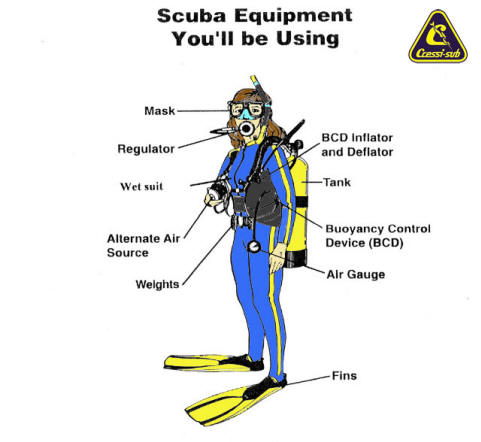
Well, that was terrifying. I don’t know what I was expecting, but it wasn’t stripping out of my BCD (buoyancy control device aka vest keeping me alive) and putting it back on again while 40 feet under the water. Looking back, it makes perfect sense that this certification is supposed to be stressful since its purpose is to prep divers for worst-case scenarios in the water, such as having a regulator knocked out of your mouth or being blinded by a leaky mask😓 It was basically a massive, self-induced stress test: “Can you do ‘x’ without losing your mind? Good. Now do ‘y.’”
The first day was hell, the second was terrifying, but the third was amazing. Hell consisted of six hours of theory and seven hours of confined water practice. It was too long. After taking my BCD apart and putting it back together for the fifth time, I was a bit done and toward the end, I was even too tired to be afraid. That part of my brain just wasn’t working, so when the instructor said: “Fall backward into the water,” I said: “Bye!” I might have even waved goodbye to him on the way down. Along with testing our endurance, we learned and practiced majority of the material this day, making the rest of the classes easier.
On the second day, we did everything from the first day again, but in the ocean with fish, poor visibility and currents. Basically, it felt like a completely different ball game and it was. Considering it was our first semi-solo dive, we did WELL. By that, I mean we didn’t panic or lose our heads when asked to do normally suicidal things like remove our air tanks and regulators while under the water. We calmly practiced: clearing face masks, locating lost regulators, removing BCDs, sharing air supplies, signaling and surfacing.
Just before being signaled to remove, hold and replace our BCDs; a current rushed the group, jostling and swinging the divers around. Obviously, these were not ideal conditions and life was a bit stressful. A fellow diver’s hand was hovering over mine and I grabbed it. We communicated our support through punctuated hand squeezes that said: “We can do this. We will do this. IT WILL BE OK.” Upon surfacing, the whole group burst out laughing for no other reason than that we were alive. #teambonding
Getting all the terrifying lessons out of the way, the third day was a breeze that reminded me why I was doing this in the first place. We were allowed to dive freely as long as we stayed close to the group. Curious divers, who strayed to look at cool starfish, would be summoned back to the school by the relentless rattle of our dive leader’s signaling device. (I never made it to the starfish😢)
This day, we mostly focused on buoyancy control and adjusting to varying pressure changes in the water, which Jeffrey, the dive center’s owner, demonstrated with meditative-like efficiency. He was with us this day, hanging around suspended in the water like a floating Buddha. No BCD, he just casually carried his air tank around between crossed legs in the middle of the water… Goals.
On this day, we also learned some flexible diving skills that are good to know, but not necessary for the certification. My boyfriend is responsible for this. He looked up a list of the skills the night before and decided he HAD to learn them. (He’s a bit of an over-achiever.) Therefore, the instructor began drilling us on: different diver tows for carrying an injured diver to safety and weight drops for fast surfacing. He also showed us how to swim 15 meters without a face mask and then replace it underwater. At this point, I sneaked up the ladder and away from danger, leaving my boyfriend to contend with his curiosity.
It was a struggle, but I’m very glad we did this. The certification has opened up a large part of the world to us that majority of people never get to experience. I know I can trust my significant other to take care of himself and not lose his head in the water. (Can you believe he used to be afraid of water?) I also know he can expect the same of me. The class was only three days, but we learned a lot, tested ourselves and are better because of it. Plus, we can swim like dolphins now😏
There are lots of locations in Taiwan to become certified and also lots of dive shops offering the certification. The three most popular places to get it done are Kenting, Green Island and Longdong Bay. Kenting and Green Island are beautiful vacation spots, whereas Longdong Bay is just convenient. It’s not very pretty and water conditions are less than ideal, but it’s only an hour’s van ride away from Taipei. If you’ve been scuba diving before and are just trying to get the certification done, it will do. However, if you’ve never been in the water before, I’d suggest Green Island. It’s Taiwan’s top diving destination and a direct contrast to Longdong Bay.
Join Diving Center
In case you’re curious, I looked at three different dive shops and reached out to two: Join Diving Center and Scuba Shop Taipei. Based on a friend’s recommendation we decided on Join Diving and couldn’t have been happier. Yes… it was torture, but they were thorough, good instructors with excellent communication skills and years of experience. We don’t speak Chinese, so there was a slight communication barrier, but they never lost patience with us, and did their absolute best to answer our many questions and make us feel comfortable. I highly recommend them, and we will use them again for future dives and possibly for getting the advanced diver certification next spring.
Stand around for an hour contemplating life with a strange mix of fear and philosophy, then JUMP! This is what a friend experienced before leaping 40 feet from the top of a waterfall into the pool below. (I didn’t do it. Apparently, old age has dampened my desire to die.) Another said that he would wait for his brain to become slightly confused and then run off the cliff before clarity and sanity could catch up with him. (I date that one 😢) He did this 4 times. According to both, the first time is easiest, since after that the brain has figured out what you’re doing and doesn’t approve.
Resting at twelve meters, Lingjiao Waterfall might be the highest cliff jump in Taiwan, and, of course, (as stated above) we’re slightly disturbed, so this is the one we started with. It’s higher and maybe even more beautiful than Hong Kong’s most famous cliff jump, Sheung Luk, which we are hoping to visit in the not too distant future. Unlike Sheung Luk, Lingjiao has managed to stay off the radar for most tourists and even locals. Except for a group of regulars, who looked like they’d been there a thousand times, we basically had the beautiful spot to ourselves… on a weekend… in July.
We brought water, wine, bread, cheese, and spread our towels out to enjoy a lazy afternoon swimming and jumping. The locals brought the music and, unwittingly, showed us where to stand and what spot to aim for when making the jump. If they hadn’t been there to demonstrate, I can’t say for sure that our group would have tried it. Twelve meters definitely looks like 20 from the top and you can’t see what’s waiting for you at the bottom.
The top of the waterfall is calm, peaceful, pretty and the perfect place to spend an hour in reflection before giving in to the chaos of an adrenaline rush. Overall though, the whole area needs a little TLC. There’s some debris piled up on the side that makes for a rough first impression and the trail to the top is completely overgrown. I seriously doubt that it’s maintained by anyone except the regular jumpers. They did spend a little time clearing it while we were there, mostly just smashing everything down and (probably) praying not to step on a snake.
If more people visited, it would probably be better maintained, but then it would also be more crowded, so pick your poison. Actually, someone did try to turn it into a tourist attraction, but rumor has it that the endeavor was shut down after a boy jumped and died. This would have obviously created a lot of bad press and scared visitors away, especially locals who believe in the Chinese superstition that water is haunted by soul-stealing ghosts. Anyway, you can still see the hollowed out ruins that were never completed, which give the place an eerie vibe.
To us, the jump seemed intimidating, but safe. Someone could land poorly in the water and end up with a few bruises, but the whole pool itself is very deep and no one in our group touched the bottom. As long as you can swim, go for it. When not jumping, it’s also nice to swim under the cliff and scramble up onto the steps. This is a cool, wet place to hide from the sun and it gives you the high ground for a surprise attack when friends come and try to pull you off… Big Mistake.
Getting Around
It’s on the Pingxi Line, exactly one stop from Pingxi Village actually, so you could also squeeze in a visit there or to Shifen Waterfall on this trip. We considered exploring Wanggu Waterfall, since it is also only one stop away, but ditched this plan when some unexpected new friends, who had just come from there, dropped in and told us how the waterfall is much smaller and that no one at all was there swimming, much less jumping.
I digress, take the bus there, but come home on the train. It’s bus number 795 and it departs every half hour from Muzha Station on the brown line. To get to the bus stop, exit the station and cross the street to the OK Mart. Fun fact, this bus stops at every major attraction on the Pingxi Line, including Lingjiao, which is where you want to get off. From there, follow signs for the Lingjiao train station, which is about 500 meters away (other blogs lie about this distance for some reason) down a small side road.
From the station, follow signs for the waterfall, which is only an additional 300 meters away. The trail for the waterfall starts at the Lingjiao Visiter Center (or at least an abandoned, nonfunctional cement building that says it’s a visitor center) and then follows the train tracks until ending at some stairs that lead down to the base of the falls.
To get home, jump on the train (no matter which way it’s going, because there’s only one ping-ponging back and forth along the Pingxi Line) and get off at Houtong Station, where you can transfer to a local train bound for Taipei. The bus ride’s under an hour, whereas the train takes two hours, but I still recommend the train because traffic gets bad on the weekends and you’ll have a better chance of finding a seat.