Showing posts with label Holidays. Show all posts

10/16/17

Moon Festival: Chang'e and the White Rabbit


Many people have forgotten this holiday’s origin story, which is a shame because there’s a goddess, a drug-making white rabbit and CAKE! In fact, every person I asked had to Google it. Just so you’re aware, there are two stories: one with a hero and one with a villain. I’m going to stick to the “bad guy” version; because that’s the one I was told.

Once upon a time, there were ten suns. Of course, this was disastrous and everyone was in a foul mood all the time; then, everyone started to die because the crops wouldn’t grow. A hero named Houyi decided to fix the problem and shot down nine of the ten suns with his bow and arrow. The people were so happy and thankful that they made him king and everyone lived happily ever after….. I don’t think that ever actually happens.

As it usually does, the power of kingship turned Houyi into a greedy, tyrannical ruler who was having so much fun killing people that he decided it would be a good idea to live forever. He sought out the Queen Mother of the West for medicine that would make him immortal and SHE GAVE IT TO HIM; not her brightest moment as the immortal deity of prosperity, longevity and eternal bliss.
Houyi didn’t take the medicine immediately. Apparently, it would only work if taken on the fifteenth day of the eighth lunar month, so he had to wait. This gave his wife, Chang'e, a chance to steal it and, not wanting her husband to go on torturing people forever, she did. After taking the medicine, Chang'e became a goddess (reigning over the moon, menstruation and rebirth) and flew up to her lunar palace where a white rabbit was waiting for her.

Of course, Houyi was pissed and tried to shoot her down, but apparently kingship had destroyed his aim as well as his soul. Legend has it that he died soon after (probably from a rage induced heart attack) and everyone decided to honor Chang'e’s excellent thieving skills with the tradition of Moon Festival... (which has since been added to the UNESCO Intangible Heritage list or should be. I was told that it had been added, but then couldn't find any evidence of it online.)

So currently, there’s a rabbit and a goddess on the Moon. The immortal little fluff ball is spending eternity on the Moon so that Chang'e has someone to talk to and as punishment for giving out too many happy pills. The little one is the god’s apothecary and, under duress, he gave the Queen Mother of the West too many immortality pills, an action that makes him (slightly) responsible for Chang'e’s fate. Even today, people still “see” rabbits making moon shapes around the holiday in honor of their friend.

In addition to having a cool backstory, moon cakes and barbeques make this one of the most delicious holidays in Taiwanese culture. Traditional cakes are “moon” shaped and filled with a sweet, dense filling that has a salted egg yolk in the center. Historically, the treats were sometimes used to smuggle secret messages across enemy lines. In recent years, they have gone more main-stream and many large chains, such as Godiva and Starbucks sell seasonal mooncakes. Chocolate and lotus flower flavors are best!

9/11/17

Hungry Ghost Festival: Halloween in Asia


My second favorite Chinese holiday just happened and I arrived to work smelling of fire and incense. It’s a bad time to be asthmatic, although, if you’re asthmatic and in Asia, you’re pretty much screwed anyway. For one month, the gates of hell are opened and spirits trapped there are free to wander the streets eating their fill and causing mischief. From Chinese mythology, the holiday starts with the story of a mother and son. The mother was wicked and when she died, found herself in hell. As in any good hell, the spirits are punished every day and not allowed food or drink.

However, the son was very good and became God (or at least one of them) when he passed on. In life, he had loved his mother very much and with his new powers, asked that the gates of hell be opened for one month every year so that the spirits could rest and eat. The son’s request was granted and Ghost Month began.

Ghost Month takes place during the middle of the Chinese lunar calendar, around August or September. In the middle of the month, when the gates of hell are completely open: festivals, parades and offerings are made to the ghosts and the gods as well. Families and local businesses set up shrines outside on the sidewalks and in the alleys, making the entire city smell like fire and incense. At night, the festivities continue with parades and celebrations at neighborhood temples. The biggest Ghost Month festival in northern Taiwan is in Keelung where hundreds of lanterns are released into the water at midnight.

The local shrines set up by families are made of incense, food and fire. The incense is meant to attract the spirits while the food is supposed to satisfy them and keep them from causing mischief. Families will set out a variety of things, but Oreos, chicken, pork, rice and noodles seem to be the most popular items of choice. When asked their favorite thing to feed the ghosts of hell, my class of six-year-olds proudly proclaimed “Oreos!”

The little fires you see at shrines are for burning ghost money, which ghosts will then be able to use in the afterlife. Although, I’m not sure what there is to buy in hell. There’s no food or water after all, but maybe they can bribe torturers for kinder punishments, such as replacing spiked whips with feathered ones.

As with any good supernatural holiday, Ghost Month also comes with a list of superstitious rules. In fact, the first person I asked to explain this holiday said that it exists because the Chinese are scared of everything. You’re not supposed to wear black (whoops), go out late at night, hike tall mountains or go near any bodies of water (during one of the hottest months of the year, yeah right). Actually, it’s a good time to be a foreigner, because all of the best hiking and swimming spots SHOULD be deserted; emphasis on should, because younger generations don’t seem to pay much attention to these rules.

Many compare Ghost Month to the western holiday “Halloween,” which is accurate except it lasts for one month instead of one day and little kids don’t get to run around terrorizing neighborhoods. Overall, Ghost Month is a time to pay respect to the dead. However, it is not to be compared with Tomb Sweeping Day, which is more about remembering family and less about feeding the ghosts of hell. Western culture probably has something to learn from both of these holidays though as it has no such days that emphasize a person’s relationship with the dead. Besides, who wouldn’t want a break from hell?

6/6/17

Dragon Boat Festival: One of Asia’s Oldest Holidays


Once upon a time, thousands of years ago, during one of China’s many internal feuds, there lived a king and a poet. They loved each other very much, but many people were jealous of the king’s affections and spread rumors that the poet was working for the king’s enemy. Of course, the poet lost the king’s favor and was banished.

As in any good tragedy, he wrote sad rhymes for the rest of his days until hearing that his king had been defeated, at which point he promptly drowned himself in a river. People dragged the river with their boats looking for the poet’s body and threw rice balls into the water hoping to distract the fish from eating his remains. According to the story, the body was never found, but the tradition of racing dragon boats and eating zongzi began.

Originating over two thousand years ago during the Warring States period, Dragon Boat festival is one of China’s oldest holidays and was one of the first events to be added to the UNESCO Intangible Heritage list. Today, it’s become an international sporting event and teams from all over the world come to try their luck in Taipei, which hosts the largest Dragon Boat Race in Asia. During the event, boats line up and race to grab their team’s flag.


Of course, each boat is brightly painted as a dragon and there’s even a special eye painting ceremony the night before a race to bring a boat’s dragon to life. Each boat is loaded with a crew consisting of a flag grabber, drummer and rowers. The drummer acts as the dragon’s heartbeat while the flag grabber has the fun job of pretending to be the dragon’s mouth, stretching out over the dragon’s head to grab the flag.

Dragon Boat Festival is officially recognized as the fifth day of the fifth month of the Chinese Lunar year, which means that the holiday can occur anytime during the month of June or even at the end of May. There are dozens of locations to watch the races in Taiwan including Keelung, Kaohsiung and New Taipei City, but the international championships are held at the Riverside Park in Taipei.

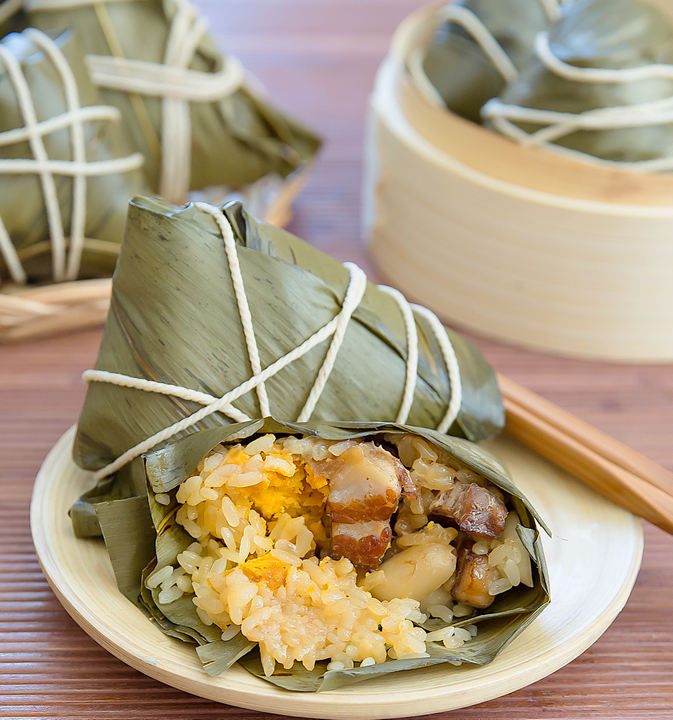
In addition to watching the races, other favorite dragon boat traditions include eating zongzi (sticky rice wrapped in bamboo representing the rice balls that were thrown into the water over 2,000 years ago), balancing eggs at noon and wearing scented sachets that in days past would have been useful for keeping bugs away and preventing the spread of disease.

4/10/17

Tomb Sweeping Day: Qingming Festival


Taiwanese families are very close knit. Unlike in western culture, it’s not uncommon for multiple generations to live together. In fact, it is even expected as custom dictates that first born sons are to live with their families in their parent’s house. The end result is that you get grandparents, grandchildren and everyone between living under one roof. This would drive westerners mad, but in Taiwan it creates a tight (only slightly dysfunctional) family unit that respects its elders.

As you previously learned, the Taiwanese are also very superstitious. Together, these two cultural values set the perfect scene for ancestor worship, which is what Tomb Sweeping Day is all about. This is South East Asia’s holiday for paying respect to and even communicating with deceased loved ones. Yes, I said communicating. Curious to know what great grandma thinks of that new boy you brought home, you’ll get to ask her.

It is believed that deceased ancestors can communicate on a living relative’s behalf with gods to bring them good fortune. Of course, if an ancestor feels slighted or unsatisfied, they can use their powers of persuasion to bring you misfortune and bad luck. These beliefs create a population that takes its duties to the dead very seriously. In fact, Tomb Sweeping Day was invented thousands of years ago by an emperor who wanted his subjects to worship a little less and work a little more. His solution was to set aside one day a year specifically for worshiping dead family members. Today, the day is formally recognized as the fifth of April, and is usually tethered to a three or four day weekend, allowing families extra time for travelling to gravesides.

As the name suggests, the main point of Tomb Sweeping Day is to clean the graves. Unlike western graves, Taiwanese tombs are usually big, elaborate affairs that house ashes of multiple generations. As in life, in death everybody still shares the same roof. (Also, it’s customary to build family tombs facing the direction of home. For this reason, many of the older cemeteries are all creepily staring across the sea at China.) Using the whole family, the “sweeping” part of the day usually lasts two to three hours and leaves everybody dehydrated and hungry. The living have to clean any fungus or mold, scare away insects, and cut or burn any weeds and bushes that decided to keep the dead company. Since Taiwan is a wet, humid place that enjoys being occasionally wracked by typhoons, the living might also have to fix water or structure damage.

Once everyone’s exhausted, it’s time for family members to pay their respects. Sweet smelling incense is burned to attract the spirits and offerings are made. These offerings consist of anything a spirit might need. Food and money are the most basic necessities. Apparently, Oreos are popular. It’s not like ghosts need to watch their figure. However sometimes family members like to donate more useful items, such as electronics. This is done using joss paper. Like ghost money, joss paper is burned, and whatever image is printed on the paper magically appears in the afterlife. This is how ghosts end up with iPhones.

After offerings have been made, you can ask the deceased whether or not they are satisfied with your hard work using two coins. The coins are tossed into the air, and their landing position dictates whether your ancestors answered yes or no. It’s basically 20 questions, but with ghosts. Matching sides mean “no,” whereas a mismatched landing means “yes.” Also, the first questions should always be: “Are you still hungry?” “Do you need more food or money? What about a charging cable?” Then, you can move on to more mundane topics, like whether or not you should buy a new house or quit your job. Finally, after learning that you somehow need to buy a new house with a job you no longer have, it’s time to picnic, eat and catch up with the living.