Showing posts with label Japan. Show all posts

1/16/17

How to Spend a Week in Tokyo


The goal: see as much as possible, spend as little as necessary. This is the polite way of saying that we planned every detail of this trip from scratch in order to thriftily make the most of our time and it worked. Going into this, we knew absolutely nothing about Japan or Tokyo. Well, we knew that no one spoke English and that food would be expensive. For the record, the first of these is completely true, no one speaks English. It was a little of a shock, but an expected one. Thank goodness for Google. However, the price of food isn’t that bad. On average, we paid about $10 USD per person for a meal and cooked our own breakfasts. Also, we weren’t starving off of scraps. Living off of ramen, katsu and dumplings, we ate very well. Expect to pay more for specialty dishes, such as sushi and tempura, though.

Okay, to save my sanity and yours, I’m just going to provide the basic outline and some places of note. I’ll do my best not to rant, promise. If you’re planning a trip to Tokyo by yourself without help from a travel agency or locals, this guide will be extremely useful to you. Pro tip, before you go, favorite all of the destinations in Google Maps. This way you can see where everything is located and get a basic idea of how to get around. It’ll also save you some time while you’re on the ground in Japan.

Day One: Arrival 


Day Two: Meiji Shrine, Omotesando, Harajuku, Shibuya & Shinjuku 


Aside from the beautiful Meiji Shrine, this is a shopping and eating day. Omotesando and Harajuku are located beside each other and across from Meiji Shrine. Walk around the shrine first, and then move on to Omotesando before ending up in Harajuku. There are hundreds of stores in Harajuku and Shibuya. Do some Google searches before you go to see what stands out as it’s absolutely impossible to see them all in one day. Harajuku is pretty amazing. Keep your eyes open for cute souvenirs and cheap clothes. You’ll have to catch the train again at Harajuku Station to get to Shibuya. If you’re interested, you can also try to fit in Shinjuku on this day. We skipped it as many of the stores are repeats of the ones located in Shibuya and I was too sick to hit up any clubs.

SHELTER – This is a great clothing store that sports Japanese brands, such as MOUSSY. Think H&M, but better.

Oriental Bazaar – A place selling any overpriced souvenir you may want. They’ve got everything from tea sets to ninja stars.

Ichiran Harajuku – This kiosk ramen restaurant has the best noodles I’ve ever tasted and the kiosk lets you design your own bowl of ramen specifically to your tastes: less oil, with extra pork and spice, done. Packets of instant ramen from this place make great souvenirs.

Harajuku Gyoza-ro – This is a delicious, inexpensive little dumpling shop located in the back streets of Harajuku. Expect a wait around dinner time.

Tokyu Hands & Don Quijote – These are two of Japan’s most famous everything stores. At least walk in and have a look around. It really is amazing how much stuff they can fit in there. Think Walmart, but on a bigger scale and with the Japanese flair for eccentric and cute.

Bic Camera – As the name suggests, this is a mega cheap electronics store. I bought a lens filter for a fraction of its cost in the states and stocked up on some hard to find film.

Day Three: Studio Ghibli, Akihabara & Odaiba 


Start your day at Studio Ghibli, and then make your way to Akihabara before ending your day in Odaiba. If you don’t know what Studio Ghibli is, I don’t understand why you’re going to Japan. However, I can offer another pro tip: Get your Ghibli tickets in advance, like two months in advance. Foreigners are completely unable to purchase tickets when in Japan. Before landing, you can order your tickets online or from a Japanese travel agency.

After hanging out with Totoro, catch the train to Akihabara. This is where most of Japan’s crazy is: maid cafes, sex stores, cosplay departments and owl cafes. It’s a fun little neighborhood. Hang out with owls, try on some furry ears and then, make your way to Odaiba. This unique little man-made island is made up of three different areas/towns. We didn’t have time for all of them, so we explored Palette Town, mostly because that’s where the famous Ferris wheel is. Some things close early on the island, so do research ahead of time on what places you want to see.

Akiba Fukurou – Do it! This is one of Japan’s best owl cafes. Only a select number of people are allowed in at one time and it’s a very calm environment so the owls are not stressed. Make your reservations in advance online.

Maidreamin – Having spent our themed restaurant budget on owls, we skipped this, but maybe it’s your kind of thing. I’ve heard from several friends that the food is terrible. So, you’re mostly just going for the experience of being bossed around by cute girls in aprons.

M’s Pop Life – This is Japan’s mega sex store. It’s not creepy and definitely an experience.

Gee! StoreGee! Store is the place to buy the clothes of anything you’ve ever wanted to be.  Furry suits and Sailor Moon uniforms seem to be particularly popular.

Venus Fort – Don’t buy anything, but the architecture is really cool. It’s like stepping into a completely different time and place. The ceiling actually changes its appearance according to real life, so the best time to go is around sunset.

Toyota Mega Web – Unfortunately, this was randomly closed on the day we went, but it looks like a lot of fun.

Oedo Onsen – This very popular, Edo-styled hot spring resort on Odaiba was very tempting. Unfortunately, like many other public resorts in Japan, it has a no tattoo policy. Moral of the story, do research and read reviews before planning to frequent any of Japan’s public hot springs.

Day Four: Imperial Palace, East Gardens, Ginza & Ueno


This day is brutal. In fact, I recommend skipping the palace and just checking out the East Gardens. That’s where the original castle remains are anyway. Then catch a train to Ginza to do some souvenir shopping before ending your day at Ueno. If you ignore my advice and plan to do the palace tour anyway, make sure to call ahead of time to see when you should arrive for tickets. Annoyingly, tickets cannot be reserved and you have to show up one to two hours in advance to pick them up.

Ginza Natsuno – This is the same shop that makes chopsticks for the imperial palace. The prices are reasonable and they make great keepsakes.

Itoya – Itoya is Tokyo’s largest stationary store. It’s basically a dream come true. Check it out, buy things. This is definitely the place to buy origami paper and stickers as well as other souvenirs.

Tokyo National Museum – Ueno is home to a handful of museums. We picked this one and were happy with our choice. After all, it’s where they keep the samurai swords.

Day Five: Lake Kawaguchiko Day Trip


Day Six: Asakusa, Tokyo Tower, Edo Museum & Golden Gai 


Along with being home to Tokyo’s oldest temple, Asakusa is also a great place to buy cheap kitschy souvenirs that are perfect for your friends back home. If you want magnets, dolls, etc., get them here. Also, Sensoji temple gets crowded fast. So, definitely go earlier rather than later. After the temple, hop the train to Tokyo Tower. (Honestly, it’s better to visit this at night, but that didn’t work for us.) From Tokyo Tower, take a bus to the Edo Museum. That’s it! This is a fairly simple day, but the transport is tricky. We were supposed to check out Golden Gai as well, but I was sick for the first half of our trip so bars and clubs weren’t really an option. Our wallets probably appreciated that. 

Day Seven: Day Trip to Kamakura 


Getting Around

Getting around Tokyo is surprisingly easy and cheap. You don’t have to talk to anyone and station signs are in both English and Japanese. By far the best way to travel is with a Suica card. This is a pre-paid all access pass to Japan’s public transit system. It works on everything: buses, trains, subway lines etc. Pick one up as soon as you can from any JR Station and then just pay as you go.

Where to Stay

When you look at Tokyo’s JR map, there’s a big rectangle in the center. Stay somewhere on that rectangle. We were quite happy at Ebisu and used the green Yamanote line for most of our travel. Honestly, the closer you are to Shinjuku, the better.

1/15/17

The Best Kyoto Eats


People first visit Japan for the sights, but they go back for the food. We were skeptical, but now we wholeheartedly agree with this sentiment. It’s hard to beat the food in Japan. Even Japanese convenience stores, like Family Mart, outclass the Family Marts in other countries. In all seriousness, we preferred Kyoto to Tokyo and food is no exception to this. It was more affordable, traditional and just as delicious.

Welcome to our guide for local Kyoto eats. Enjoy. You’ll never think of Asian food the same way again. For example, I learned that I actually like ramen. It’s delicious! For the record, I had tried ramen several times before and it was ok, not really my thing. That said, I cleaned every single bowl I had while in Japan. The difference was incredible. I actually understand why people eat it now.

Ramen


Ramen Sen no Kaze Kyoto – This place claims to have the best ramen in the world and honestly they might be on to something. They definitely cook the best cuts of pork, hands down. It’s savory, salty and falls apart in the broth. My mouth is literally salivating just thinking about it.

Arrive early and plan on having an hour wait. This isn’t a big deal. The receptionist will take your name, number and then you’ll be free to wonder around the various shops or maybe grab a drink at one of the nearby standing bars.

Kyoto Gogya Ramen – Gogya’s claim to fame is “burnt ramen.” I don’t know why, but it’s delicious. You have to try it at least once. It’s a little bit more expensive than Sen no Kaze and there was no line when we went. That said, the ramen broth was just as good if not better than our bowls at Sen no Kaze.

Dumplings


Chao Choa Gyoza – If dumplings are your thing, this place is fantastic and won’t break your wallet. Come in, sit down, have a drink and eat your fill of all the dumplings you could possibly want. In addition to traditional pork, this place also serves some experimental flavors, such as ginger, wasabi and there’s even a chocolate option.

Sushi


Sushi no Musashi – This place offers delicious, affordable, conveyor belt sushi. Located in the basement mall of Kyoto Station, it’s also extremely convenient. While I’m sure it’s not the best sushi in Kyoto, it was the best option for us. Essentially, we eat a lot and wanted to fill full without breaking the bank. Plus, it was still better than any sushi we’ve had in Taiwan. It really is hard to go wrong in Japan. Be warned, this place gets quite crowded around dinnertime.

Kobe Beef


Reportedly the best in the world, we couldn’t leave Japan without trying Kobe Beef. You should know that this was our splurge night at the end of our vacation with extra unspent cash our pockets. No regrets, it was incredible.

We had our Kobe beef yakenida style, which means that we cooked it ourselves at our table. This by itself was magical. The beef is held over open flame for about 20 seconds and then is magically ready to eat. Everything was mouthwateringly good. Anyway, the point is that we can now officially say that we’ve tried the best beef in the world. Win!

1/10/17

How to Spend a Week in Kyoto


Kyoto is amazing. If on a budget, just skip Tokyo altogether and park yourself in the heart of Kyoto. The cobblestone alleys and river trails will make you feel instantly at home and welcome, as opposed to Tokyo, where you are in constant danger of being swallowed by skyscrapers.

When planning your first trip to Kyoto, make sure to allow five or six full days for exploring the city and surrounding areas. You’ll need three days for day trips and at least two days for exploring the actual city. As you make your way around, keep your eyes peeled for geisha and maiko (geisha in training). You’ll see maiko everywhere, but geisha are much more elusive. Locals who have lived in the city their entire lives have only ever seen one or two.

Day 1: Arrival and Gion


Arrive, get settled. Do laundry if you’ve been living out of a suitcase for the past week. Grab dinner downtown and walk over to Gion afterward. This district is home to upscale dining and shopping. Traveling on a budget, we didn’t stick around, but enjoyed looking at the traditional Japanese storefronts and shops. Again, be on the lookout for geisha. This is where they work.

Today, geisha play the role of ultimate hostess. They are trained in the arts of conversation making, drinking games, songs, music, etc. They are also very expensive to hire and hard to find.  A previous customer is usually required to make introductions. If you’re desperate to see a geisha performance while in Japan, your best bet is to catch one of the scheduled shows at Gion Corner.

While wondering around, be sure to check out Yasaka Shrine and Kenninji Temple, these two sites bookend Gion’s most popular streets making them good landmarks to use.  Kenninji Temple will be closed at night, but Yasaka Shrine with its hundreds of hanging, glowing lanterns is especially beautiful after the sun goes down.

Day 2: Nara & Horyuji Day Trip


Day 3: Northern Kyoto and Arashiyama


Warning, this is mostly a walking tour with a short hike included. Be ready. Start the day in northern Kyoto with Kinkakuji Temple. Get there early to avoid the worst crowds. From here, walk downhill to Ryoanaji, Kyoto’s most famous rock garden, and then on to Ninnaji Temple before catching the train to Arashiyama. Don’t worry; the walking is mostly downhill.

Northern Kyoto

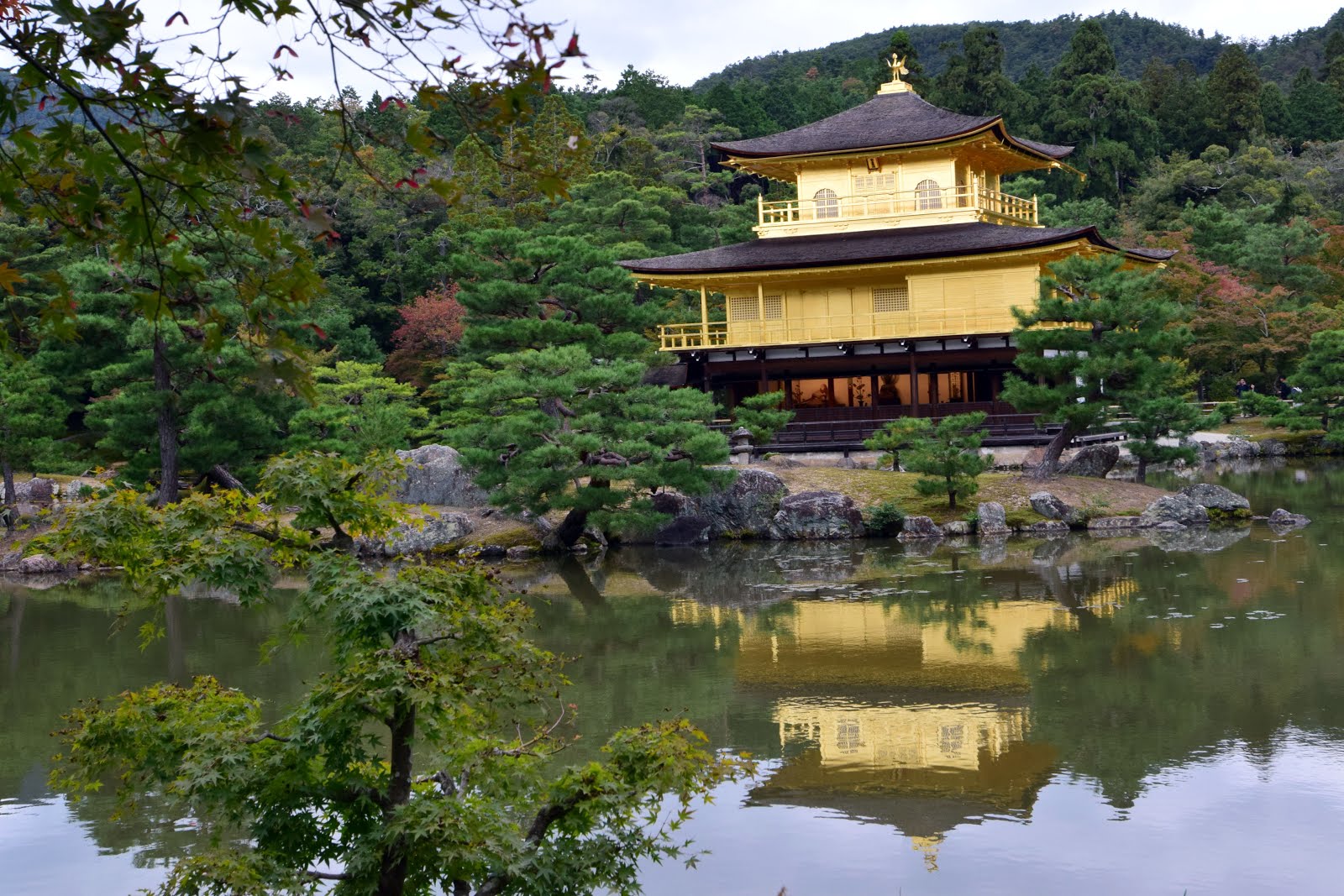
Kinkakuji, aka the golden temple, and its refection on the water below is the highlight of northern Kyoto. Inside and out, the temple is covered in gold leaf. Where there isn’t any gold, mirrors have been placed to create the illusion of it. Despite being a bit kitschy, it’s quite beautiful. Food tangent: as you follow the path to exit the temple, look out for wasabi peanuts. There are vendors set up all along the way offering food, souvenirs and incense packets.

After the gold temple, the rock garden will be the next attraction you come to. I know it’s a bit cliche, but it is a great place to sit down and reflect. The rocks are arranged so that you can never see them all at once. From any position, there’s always at least one that’s just out of sight. Supposedly, this is a good way to stimulate and order your thoughts or just drive the OCD a little bit more insane.

Be sure to pay attention to the sand surrounding the rocks as well. It’s hand swept every morning into subtle patterns around the rocks. Along with the rock garden, there’s also a Zen garden and pond on the premises. Walk around, check things out. There are some weird looking trees that would make Tim Burton proud.

You’re last stop in northern Kyoto will be Ninnaji Temple. When you exit the rock garden, keep walking downhill until you reach the temple gate. We were stupid and skipped this temple, which is one of our only regrets. It’s listed as a World Heritage Site and many of the temple’s buildings date back to the Edo Period. If you have to skip something, maybe make it the rock garden instead.

When you finish up at the temple, walk across the street to the local train station and catch a ride to Arashiyama. You’ll see signs for the station and it is very easy to find. Tickets are, also, very cheap and you can pay out of pocket.

Arashiyama

You’re first priority in Arashiyama will be food. Luckily, it’s easy to find. There are a variety of delicious restaurants to choose from right by the station. Go window shopping, pick out the best looking katsu and go for it. Yes, I don’t know why, but in Japan, restaurants fill their windows with plastic replicas of food served. At least it makes choosing where to go easier.

After lunch, head for the monkeys. All websites fail to mention that this is actually a good little hike above the city that offers glorious views of the Kyoto skyline. We were sweating by the time we reached the top, but it was worth it.

Monkeys are adorable and fiendishly petty just like their distant relatives.  We thoroughly enjoyed watching a baby monkey trick an older monkey out its toy sticks. The baby ran up, punched the older monkey and then ran back to a tree branch. It did this repeatedly until the older monkey followed it, which allowed the baby monkey to get away and scramble down another branch in time to take the older monkey’s sticks. Older monkey picked up a rock and got revenge later, but little monkey seemed unrepentant.

Also, it’s completely freaky to be up close and personal with another creature capable of picking things up. Their little thumbs have knuckles, nails and winkles just like ours. You’ll see them in detail when they try to steal your food. After an hour or two watching the monkeys eat, groom and play; head back down the mountain and back toward the train station.

When you come to the station, keep walking and soon you’ll come to Tenryu-ji Temple, which is located right next to Arashiyama's famous bamboo grove. The grove is accessible from both the temple and street. If you’re feeling templed-out and just want to check out the grove, you can do that. However, the temple does offer a professionally groomed Zen garden as well as a nice place to sit and eat those wasabi peanuts that you bought earlier. To access the bamboo grove from the temple, walk through the garden and find the temple’s back exit.

The stalks are massive and it’s an enjoyable little walk. As you exit the grove, look for signs that point to the JR station. This is your way home. From the grove, the station is a short walk away and clearly marked. Do not confuse the JR with the local station, which is located closer to the grove.

Getting Around

This trip requires the use of bus, local train and JR train. That said, any sort of day pass is basically useless and you may as well pay as you go. To get started, catch bus 101 from Kyoto Station. This will take you directly to the golden temple. The fare is cheap and you can pay on-board.

To get from northern Kyoto to Arashiyama, hop the local train at Ninnaji Temple. To get home from Arashiyama, walk to the JR station from the bamboo grove and catch a train bound for Kyoto Station. The trains are frequent and you’ll have no problem getting around.

Day 4: Himeji Castle & Princess Sin Day Trip


Day 5: Eastern Kyoto


Congratulations! It’s a biking day! Or at least that’s how we felt about hearing that the best way to see eastern Kyoto is on two wheels. Several of the city’s main attractions participate in a biking day pass, including the silver temple, Heian Shrine and Kiyomizudera Temple. These will be you main stops throughout the day. You’ll also bike down the Philosopher's Path, which is just cool. I didn’t even know that was possible.

Your first stop will be Ginkakuji Temple. This temple is known as the silver temple because it mirrors the golden temple or at least that’s what “people” say. Personally, I don’t see it. Yes, both temples stand over a small pond, but that’s about all they have in common. In my humble opinion, these two temples couldn’t be more different.

For starters, the silver temple is not actually covered in silver. It’s a traditional wooden temple in the middle of a beautifully landscaped Zen garden. The garden and the temple’s simplicity work together to create a humble, inviting space. As opposed to the golden temple, which can feel as if the designers were trying a bit too hard. I mean, why does a temple need to be covered in gold and mirrors? That’s not mentally distracting at all…

From Ginkakuji Temple, collect your bike and travel down the Philosopher’s Path toward Heian Shrine. Like other shrines, Heian is free to the public as well as to annoying tourists on bikes. Check it out. The most memorable thing is a huge tori gate, which stands before the shrine casting shadows over the surrounding area.

After a short rest, continue on to Kiyomizudera Temple. This temple is famous for the healing powers of its water. You probably haven’t been using the water troughs at every temple, but you should take the time to do it here. The water tastes strangely sweet. For real, they could bottle it and make a fortune. Also, the dippers are sterilized between uses with a UV system. So, you can heal whatever illnesses you have without having to worry about catching a new one. It’s a very thoughtfully setup to accommodate even the worst hypochondriac.

On your way back from the temple toward the bike lot, keep your eyes peeled for a Uji matcha tea shop. The finest matcha in Japan is rumored to come from Uji city.  If matcha is your thing or you just want to try it, I suggest buying it here. Personally, I recommend the matcha latte mix with brown sugar. Make it with milk. Hmm, it’s so good.

Getting Around

Ok, let’s be real. Biking is super fun, but not always the easiest thing to do. It depends on where you’re staying of course, but the hardest part of this trip is getting to the Ginkakuji Temple. It’s not a very steep ride, but it is a slight incline all the way. Upside, you get to coast for the rest of trip. By bike, it’s about an hour from Kyoto Station.

To get to there, bike up the river path if possible. It’s pretty and you won’t be fighting cars for street space or running over people. Of course, you will have to walk your bike up and down stairs to get on and off the trail. Good things in life can’t be too easy.

Once you come to the path for the silver temple, bike parking is located down the closest street. It’s the huge lot where all the buses are. Purchase your biking pass here. This will let you park your bike for free at various attractions around Kyoto. The helpful parking lot attendants can also provide you with a map, showing the locations of the other parking lots. You need this.  Parking for Heian is located under the shrine and you might have to climb so stairs to get Kiyomizudera. The important thing is not to give up, it’s worth it.

Day 6: Hiroshima and Miyajima Day Trip


Day 7: Departure 


Conclusion


A few more things of note: find time for Inari Shrine, dress as a geisha, eat all the food and get a JR Pass. Inari Shrine is actually a three hour hike. It’s completely free to visit and never closes so you can go at night. Just remember to take a flashlight. If you don’t have time to do the whole hike, that’s ok. Still check it out. It was a major highlight of our trip and definitely our favorite shrine, because of the way it interacts with the environment and because there are foxes everywhere. Foxes (kitsune) are believed to be the messengers of Inari, who is a genderless deity of agriculture and general prosperity.

Another popular touristy thing to do in Kyoto is dress as a geisha or maiko. It’s not cheap, so if this is on your wish list, budget accordingly. Last, but not least, get a JR Pass. It won’t be much help to you in the actual city, but all of your day trips will be covered as well as your rides to and from the airport. If you’re interested in a great place to stay, check out K’s Hostel. It’s quiet, clean, centrally located and you’ll meet a bunch of cool people in the lounge. Plus, they do bike rentals.

12/14/16

Tokyo Day Trips: Lake Kawaguchiko


This was our first day trip in Japan and its major purpose was to get a glimpse of Mt. Fuji. We missed climbing season by one month and had to settle for getting some great pictures of the mountain instead. There were several ways to do this. Our choices were: travel to Hakone, Lake Kawaguchiko, Fuji Fifth Station or try to do a combination of the three. In the end we settled on a single day trip to Lake Kawaguchiko, the most developed of the five Fuji lakes. In the end, this trip offered the best views for the least amount of money and we couldn’t have been happier with the results. Essentially, we got our pictures and there was plenty to do. It was also easy to get around and Mt. Fuji was always in sight.

Of course, Lake Kawaguchiko is most famous for its views of Mt. Fuji, but you certainly won’t get bored while visiting. The second most famous attraction at the lake is a short gondola up to a viewing station. The ropeway does offer incredible views of the mountain. At the top of the gondola, you’ll find food, bathrooms, and a short hiking trail. Do it! It’s very short, more private and offers better views than the actual platform. Hike until you come to a rabbit shrine and then stop. You can’t miss it. It’s rabbit sized and covered in acorns. This could quite possibly be the best part of your trip. It’s hard to beat being alone in the woods with great big mountain like Fuji to keep you company.

When you finish having a moment with the mountain and have paid your respects to the rabbits, head back down to the gondola. The hike does continue on, but it’s a little too intense for a single day trip. The ropeway is fun, but the best views of Mt. Fuji are actually on the other side of the lake. From the ropeway, hop on the retro bus and take it to the very last stop: Kawaguchiko Natural Living Center. It’s a short ride and the buses run every 15 minutes.

At this stop, you’ll find more bathrooms, food and another trail offering great views of Mt. Fuji. This trail follows the lake’s edge and wonders through a pretty flower garden as well. You’ll probably see some fishing boats, and even some lucky buggers water skiing and tubing on the lake. (New life goal: do water sports on a volcanic lake beneath Mt. Fuji. Looks like I have to go back.) At the very least, you’ll be able to walk down and put your feet in the water. It felt pretty cold when we were there.

To get more views of the volcano, we hopped back on the retro bus and took it to Nagasaki Park. There are no facilities here, but it is a nice quiet lakeside trail. We ran into a few families picnicking by the lake and several bikers. (If only we had known there were bikes! This would have been a very different trip.) Follow the trail until it spits you back out on the road and continue walking until you reach signs for the Itchiku Gallery.


Here, you’ll be able to get back on the bus and take it anywhere you want to go. We decided to stay and check out the gallery before continuing on. Itchiku was a famous kimono designer who revived one of the oldest traditional fabric dying methods, which had previously been lost to history. The process is similar to really intricate tie-dying, emphasis on REALLY INTRICATE. Itchiku definitely made the process his own and his work has been displayed across the globe, including in Washington D.C.

As you can imagine from his work, Itchiku was not a boring man and his gallery reflects this. It’s beautifully designed with a flowing architectural pattern and excessive attention to detail. There’s even a beautiful wooded garden behind the gallery that’s included in your admission ticket. Check it out. It has a pretty little waterfall and apparently Itchiku had a thing for doorways. Maybe he believed in the fairy folk? You’ll see what I mean.

After our gallery visit, the buses were about to stop and it was time to head back to Kawaguchiko Station for dinner. If you have more time, the Musical Forest and Craft Fair look interesting or you can even backtrack to the ropeway and rent a paddle boat for half an hour. This last option was seriously tempting, but we decided to skip it in favor of some really good food. Priorities!

In all seriousness, this dinner was one of the highlights of this trip and you simply must eat here if you visit. Fuji Tempera is a great tempura restaurant that’s a short walk from the train station. The food was affordable, filling and delicious. It was the best tempura experience we had while in Japan. There you go: Fuji and fried things. What more could you want?

Getting Around


Reserve your bus tickets. DO IT! I don’t care if you want to go at six in the morning on a Wednesday, reserve your tickets! This trip almost didn’t happen for us because NO ONE online talked about reserving the stupid bus tickets. Basically, we were extremely lucky and there were some no shows, which allowed us to hop on an otherwise completely full bus. I think you can reserve tickets online, but I’m not certain. Have fun figuring that out.

The buses depart every 30 minutes from Shinjuku Station. Do not be fooled by the frequency and reserve your tickets! You have been warned. It costs just under $2,000 JPY per person for a one-way ticket. You shouldn’t be, but if you’re buying tickets on the fly, you will not be able to purchase a round-trip ticket until you arrive at Kawaguchiko Station. Make sure to do this as soon as you arrive as the buses fill up fast.

From Shinjuku Station, it’s a two-hour trip to the lake so get an early start. At the very latest, try to be on a bus by nine in the morning and reserve your return tickets for some time after dinner. The stop for the lake is called Kawaguchiko Station. It’s a nice station with bathrooms, food and even a souvenir shop in case you feel the need to purchase some legitimate Mt. Fuji waters.

Kawaguchiko Station is also where you buy any lake passes that you may want. The most popular tourist pass includes discounted ropeway tickets, a ferry ride and an all-day retro bus pass. Of course, we decided to skip this and just purchase two all-day bus passes. If we had known about the bike rentals, we might have even skipped these.

12/6/16

Tokyo Day Trips: Hiking Kamakura


Basically the main attraction at Nikko, the Toshogu Shrine, was covered in scaffolding so we had to find something else to do. Enter Kamakura. This is off the beaten path for most tourists. However, it gets quite crowded on the weekends with locals who are trying to take a short break from the city. A break was exactly what this trip was. After five days of pounding concrete, the rolling hiking trails of Kamakura were just what our bodies needed. The varying inclines and short climbs massaged our aching muscles, giving them a much needed break from the constant strain of monotonous city walking. It was, also, just nice to be in the woods and away from the hustle of everyday urban life. We already knew that Japan is a famous hiking destination and on this day we had a little taste of why.

Kamakura 


This small little city is located on the outskirts of Tokyo about an hour’s train ride from Shinjuku Station. Kamakura’s main claim to fame is a giant statue of a seated Buddha. In fact, it’s the second largest Buddha statue is Japan. If you’ve been reading my blogs, you know where the largest one is. Along with the “Great Buddha,” Kamakura is home to numerous temples and shrines. So many, in fact, that Kamakura is often referred to as “Tokyo’s Kyoto.” Among these temples are five great Zen temples, which include Japan’s second oldest Zen temple.

The small city applied for World Heritage recognition, but was denied. Honestly, I think UNESCO was just trying to cut Japan off: “Sorry, but your country has surpassed its World Heritage allowance for this century. Try again later.”

Many of Kamakura’s temples are connected via a system of hiking trails. In addition to being enjoyable in their own right, these trails are a great way to travel around the area. On our trip, we hiked the main two trails Tenen and Daibutsu. There is a third trail, but we decided to skip it in favor of a convenient exit. Both trails are beautiful. In several places, the path has been directly cut into the rock and, of course, everything is overgrown with roots and moss. So, the smell of green, living things follows you everywhere.

Both trails are, also, littered with hollows and small caves. Be sure to look for them and peek inside. Many are home to graves, memorials and (most commonly) trail guardians. The most notable of these was a Buzz Lightyear figurine someone had left on the Tenen trail. Bet he feels confused.

O, I almost forgot. Remember all those cool samurais with their shiny swords? This is where they lived. The hiking trails I’m about to start talking of were carved out by these guys. Of course, the samurai are long gone, but their old traditional Japanese houses still exist and are even occupied. As you can imagine, this is a rather upper class neighborhood in Japan with lots of old money. You’ll get to see it on your visit. The area is located right by the first trail head. The two trails are very similar and each one takes about an hour and a half to complete. However, the Tenen trail does offer better views and it’s a little bit more off the beaten track than Daibutsu.

Tenen Trail


This trail offers sweeping views of Kamakura and the surrounding area. In my opinion, it’s the most beautiful of the two trails. Tenen trail connects Zuisen-ji Temple with Kencho-ji Temple. You’ll want to start at the Zuisen-ji Temple entrance and then hike to Kencho-ji Temple. The trail entrance is located beside Zuisen-ji Temple, not inside of it. So you do not have to visit the temple if you don’t want to. That said, there are a few good reasons not to skip it. First, it has bathrooms. Second, it, also, has a really cool old traditional cemetery and third; the gatekeeper can help you find the trail head in case you missed the signs for it. We did, so keep a sharp eye out. The trail begins with a steep ascent up into the woods. Surrounded by boulders and tiny cliffs, this is possibly the most picturesque part of the trail.

Tenen trail is an easy straight path at first, but there are some splits and things are not always clearly marked. Your best bet is to follow signs for Kencho-ji Temple. Be especially careful when you come to the kitchen. (Yes, there is a kitchen in the middle of the woods. This could only happen in Japan.) Here, two of three different trails intersect and there isn’t any English. To figure things out, we had to Google the Japanese characters for Kencho-ji Temple and read the signs by comparing the pictures. If memory serves me correctly, you want the path located above the kitchen that goes to the left, aka: not the path that runs along the bamboo.

(That’s right. Just in case you forgot that you were in Asia, there is a bamboo grove in the middle of the hardwood forest. I kept trying to get pictures of the squirrels jumping around and playing on the stalks of bamboo, but I suspect they were on rodent crack and it didn’t work out.)

Hopefully, you get yourself sorted without too much difficulty and make your way to Kencho-ji Temple. Tenen trail terminates above the temple, offering beautiful views of the temple complex from above. Yes, you have to go through the temple to get out, which is fine. You don’t have to pay and it’s a charming Zen temple with lots of naturalistic gardens and winged guardians lurking about.

This is Kamakura’s oldest and most important Zen temple. The complex is rather large and made of many buildings. One of the temple’s most striking features is a gold enameled gate. Things this elaborate are no longer made in Japan and it’s stunning. Also, keep your eyes peeled for monks going about their day in traditional wooden sandals. Secretly wishing to be a character from a Miyazaki film, I was fascinated with these shoes. I came extremely close to buying my own pair, but faced the fact that I would never actually wear them and settled for pictures instead.

Daibutsu Trail


Your next adventure is an easy walk from Kencho-ji Temple. After exiting the temple, keep walking for about ten minutes before turning to reach Jochiji Temple and the Daibutsu trail head. You may need to refer to Google Maps, but we had no problem finding the path. In general, this trail is better marked than the Tenen Trail and the signs are in English. Just keep following the path for the Great Buddha. As you may have guessed, this trail connects Jochiji Temple with Kamakura’s main attraction. In fact, Daibutsu translates to Great Buddha.

Feeling a little bit of temple fatigue (It’s a real thing), we opted to bypass Jochiji Temple. So, I can’t tell you too much about it other than it’s one of Kamakura’s top five Zen temples. However, I think it’s near the bottom on the list.

The end of the trail will put you out on a sidewalk. From there, walk straight to reach the Great Buddha. It’s not far, less than five minutes maybe. You’ll have to spend a little bit of money to get in. It’s $500 JPY per adult. Look on the bright side, there are bathrooms inside and the Buddha is very memorable. You’ll see it on a lot of postcards and occasionally in the news, so it is really cool to have seen it in person. Like other Buddhas, its expression is serene and there’s a pleasant smelling incense alter resting in front of the statue. Japanese incense is very famous and the pleasant smell is one of the first things you will notice about the place.

Getting Around


Getting to Kamakura is ridiculously easy. You’ll need to depart from Shinjuku Station on the red Shonan-Shinjuku Line destined for Zushi and get off at the stop for Kamakura. Be careful, there’s a split in the line so make sure your train is bound for Zushi. There are trains every half hour and there’s no need to reserve seats. To get everything done, you’ll need to depart Shinjuku station around eight or nine in the morning.

From Kamakura station, it’s a combination bus ride and walk to the Tenen trail head at Zuisen-ji Temple. This website explains how to get there pretty well, except for the last part. When you reach Zuisen-ji Temple, the trail head is on the right. IT IS NOT INSIDE THE TEMPLE.

Getting back to Tokyo from the Buddha is, also, really easy. From the Great Buddha, walk ten minutes to Hase station and catch a local train headed to Kamakura. From there, hop back on the Shonan-Shinjuku Line and go home.

Final Thoughts


Do it! Wear comfy shoes and dress for hiking. Pack lots of snacks and maybe even a picnic lunch. Alternatively, you can eat at a Family Mart between trails. There’s one located within shouting distance of the Daibutsu trail head. Just don’t turn, keep walking straight and you’ll immediately see the Family Mart. You should know Family Mart food in Japan is awesome. Try it at least once so you can compare it with food back home and feel disgusted with your country. The Family Mart, also, has bathrooms. Basically, it’s a great place to stop and rest before starting in on your second hike of the day.

11/30/16

Kyoto Day Trips: Nara and Horyuji


"Let go of my shirt! Stop butting me in the ass! No, I don’t have food for you!" Honestly, you can talk at them all you want, but the deer at Nara will neither understand or care. Also, you had best give them what they want or they may put in a bad word about you with their supernatural friends. These tiny, annoying, but cute animals are believed to be messengers of the gods. In fact, they are so revered that in the whole of Nara, there is a ban on hunting them. You can guess what happened next. The giant rats reproduced unchecked and now thousands of them freely (and without fear) roam around Nara.

Most of them have the good sense to stay in or around Nara Park where there are vendors selling deer snacks and plenty of tourists to buy their wares. However, some can be seen walking around the city proper. Thankfully, vendors and shop owners keep brooms handy and are consistently on the lookout for scat. It’s hard to find a bigger foot traffic deterrent than a pile of poo on your doorstep. Wow, this blog is not headed where I thought it would be. We’ll come back to the deer later.

In addition to getting in touch with your inner Artemis, this trip is also about history and wood, specifically wood buildings. The world’s oldest wooden structure is located just outside of Nara and the world’s largest wooden building is actually in Nara Park. That’s right! You guessed it. They are both World Heritage sites. Horyuji, the oldest one, was actually Japan’s first recognized World Heritage Site, which was quickly followed by many more. Both of the buildings are Buddhist temples and at one time, Todaiji (the largest one) was the most powerful Buddhist temple in Japan.

Horyuji 


Start your day at Horyuji. Be warned, this will be the most expensive temple you tour in Japan. They charge $100 JPY per century and its 1,500 years old. Once you do the math, it is worth a visit. This is the oldest building I’ve ever seen by a thousand years, making Jamestown and Himeji Castle seem like architectural infants. Of course, bits and pieces of the temple have needed to be replaced over the years, but the original structure still stands and some of the replaced pieces, such as eaves, are on display in the temple museum.

As you walk around the complex, you’ll have to admit that the temple and pagoda both look pretty good for being almost 2,000 years old. Considering Japan’s history of earthquakes and fire bombings, it’s amazing that they are still standing, let alone looking clean and sturdy. By the looks of them, both buildings will probably outlast our lifetime. These monks know what they’re doing.

Currently, the pagoda is being used to house statues that predate the complex. I know this because visitors are allowed to peek inside and have a look at their worn faces. The indoor, directional lighting of the pagoda creates shadows and an intimately eerie setting. As if from any one location, you can’t ever see a statue’s entire face. I digress, the point is that there is much more to Horyuji than just an old building to see.

Nara


After touring the temple and taking a stab at mindfulness, it’ll be time to head back to Nara for more temple trekking and deer frolicking. Before venturing out of the station, grab lunch. You’ll have your choice of sushi, katsu, curry and other Japanese favorites. Honestly, I miss katsu terribly and wish Taiwan could learn how to cook pork properly. Take your time while eating, you’ll need strength for the afternoon’s adventures, which may begin by having to run after a deer that is triumphantly galloping away with your map. To get started, catch the sight-seeing tour bus from Nara station to Todaiji Temple. It’s a short inexpensive ride and the buses run every ten minutes. There’s no need to go looking for deer, they will find you.

On your walk to Todaiji Temple from the bus stop, deer will start to randomly follow you, nosing your bag and occasionally butting you in the legs. It’s incredibly adorable, because they are tiny and have been de-horned. But seriously, my dog is better behaved than this. On second thought, that’s probably to be expected. Also, the humans are just as bad. Occasionally, you’ll see deer lying down around the park, trying to rest. At which point, visitors rush over to try and get selfies with them. Be careful which deer you choose to pose with. Does tend to spook more easily, but are definitely cuter. Whereas, the bucks won’t spook, but they may decide to tackle you while your back is turned. These deer are not above fighting and will sometimes attack silly humans.

When you’re done pretending to be Diana, have a look around Todaiji Temple. You do have to pay to get in, but the price is a reasonable $500 JPY. Basically, it’s a large temple with large statues. There are many statures inside the temple, but the most famous one is the bronze Buddha. In fact, you have the pleasure of viewing the largest bronze Buddha statue in the world. It just so happens that this Buddha is protected by Japan’s most famous guardian statues. With their fierce expressions and giant proportions, these statues actually made more of an impression than the Buddha. Their presence is enough to make anyone think twice about messing with the Buddha, even if it does have a giant tempting door in the back of its head.

Upon exiting the temple, you can continue your tour around Nara Park or do what we did and abandon the rest of the day’s plans in favor of some free time back in Kyoto before dinner. Both are excellent choices. If you decide to stick it out in Nara, make your way to Kasuga Taisha Shrine and then finish up with Kofukuji Temple before catching the bus back to the train station. Both of these sites are located within the park and I’m sure the deer will keep you company as you make your way around.

Kasuga Taisha Shrine is famous for its thousands of lanterns and Kofukuji Temple is home to Japan’s second tallest pagoda. These places sound pretty cool and I’m a little sad that we didn’t stay to check them out, but only a little. Kofukuji is supposed to be one of Nara’s top three temples (the other two are Todaiji and Horyuji), so you may want to at least grab that one on your way out.

One last thing to consider when planning your trip to Nara is Nara Dreamland. Google It. We opted out because of the $50,000 USD fine, but you should at least be aware that it exists. You’re welcome.

Getting Around


This is one of the easiest trips you can make from Kyoto. Just hop on the train. There’s absolutely no need to reserve tickets because the trains run so frequently. In fact, I don’t even think you could reserve tickets if you wanted to. Also, all the trains are covered by the JR Pass. If you don’t have a pass, don’t worry about it. Nara is only 45 minutes away and tickets are reasonable.

To get to Horyuji, take a train from Kyoto to Nara Station. Once there, transfer to a local train going to Horyuji station and get off. It’s a short ride and the trains run frequently. From here, you can either take a bus or walk to the temple. To fit everything in, you’ll need to leave Kyoto station by eight or nine in the morning. Also, try to finish up Horyuji by eleven or twelve and be on your way back to Nara for lunch. If you plan to see everything, you’ll need most of the afternoon for the other temples. Have fun and say “hello” to the big rats for me.

11/21/16

Kyoto Day Trips: Himeji Castle and Princess Sin


Before even seeing the old castle, we heard stories about its history and got the feeling that there was something unique going on behind the white walls. For those who haven’t heard the stories, Himeji is Japan’s oldest remaining castle that hasn’t been touched by war, fire and earthquakes. During World War II, the Himeji area along with the rest of Japan was heavily fire bombed. The area surrounding the castle was completely destroyed and a bomb did land on the castle itself, but it did not explode. After learning this, you start to think that there’s something special looking out for this old keep.

Then, you learn that Himeji castle withstood a record breaking earthquake in the 1950s. Again, the entire area around the castle was destroyed, but not one building inside the keep fell. If you bother looking further into the castle’s history, you will, also, learn that Himeji Castle has never once been locally attacked or under siege since it was constructed 500 years ago. By this time, your original inclination that something is looking out for this castle is confirmed and you start to wonder how many bodies are buried under the foundation. Just kidding, this isn’t Europe after all.

Upon actually seeing the castle, you start to understand some of the structure's good fortune. Put simply, it is very well built. The fortress is firmly positioned upon a hill that gives a clear view of the surrounding area. Like any good feudal castle, it also comes standard with overlapping guard walls, archery cubbies, iron gates and varying moats. It’s definitely enough to give any would-be attacker pause.


On top of which, anyone trying to storm the keep would have had a hard time burning their way through. The keep’s walls are covered in plaster. While this material does burn, it doesn’t go up in flames nearly as fast as bare wooden walls, which is what most other historic Japanese castles are made of. It never happened, but a hypothetical attacker would have quickly learned that there are easier walls to breach.

In contrast, today, it’s quite easy to explore the inside of Himeji castle. That’s right. They let you inside. They even let you go all the up to the sixth and tallest floor of the keep. There’s just one thing: You have to take off your shoes, which is fine. Just be careful not to fall. The wooden floors of the castle are worn shiny and smooth from heavy foot traffic, making it all too easy to slip and slide around in sock feet. Yeah, that happened. More importantly, it happened in a 500-year-old castle, which is just awesome.

Apart from the temptation to go skating across the castle floors, the inside of the keep is surprisingly warm and inviting. The space is softly lit by a spattering of tiny windows and the smell of well-oiled wood follows you as you make your way to the top of the keep. On your way up the flights of stairs (being very careful not to slip on the steps), you realize even more that this structure was designed to accommodate soldiers and serve as a last stand. Each floor is designed with a trap ceiling and the inner rooms of the keep were all used as armories. You can still the ancient hooks on the walls where weapons were once stored. That said, soldiers stationed at the keep didn’t really have that much to do. I imagine all those weapons were really shiny.

From what I understand, majority of the soldiers actually lived in the keep’s fortifying walls. A portion of these are also open to the public. The old wooden rooms in the walls now serve as a makeshift museum, displaying artifacts and teaching tourists about the history of the castle. This is where you learn about the transformation of the castle from a small wooden building on a hill into a six-storied keep, as well as about Princess Sin. Every good castle has a princess story and Himeji does not disappoint.

The story begins with the princess’s first wedding. After her marriage, Princess Sin and her husband moved to Osaka castle. Unfortunately, Osaka castle is not under the same powers of protection as Himeji keep. Shortly after their wedding, the castle was seized and Princess Sin’s husband died defending it. (In Japanese history, he is portrayed as the ultimate Black Fish.) With help, his wife was able to sneak away and escape back to Himeji. She was escorted home by a feudal lord who commanded a large fleet of ships.

The story goes that Princess Sin fell in love with the lord on her journey home and married him while still at sea. So, you see, fairy tales do happen and the couple lived happily ever after at Himeji for a few years at least. You’re about to learn why most fairy tales end after the wedding.

With her second husband, Princess Sin bore both a son and daughter. Her son fell ill and died young. After which, the princess suffered through a consistent string of miscarriages and still births. In response to this, Princess Sin drowned her grief in religion. She prayed, prostrated and had many shrines built. As a reward for her efforts, Princess Sin’s husband fell ill and died and early death. The princess never bore another healthy child.

At this, a person of less strength and character would have turned on their religion, but not Princess Sin. She cut her hair, changed her name and left Himeji to live out her life as a Buddhist nun. She wasn’t blessed with an early death either. The princess would carry her loss until she died of ripe old age in her seventies. Are you crying yet? This is not the story I had signed up for when starting to read about a happy little girl who lived in Himeji. Give me my $1,000 back!  (I’m kidding, kind of.)

It does cost $1,000 JPY ($10 USD) to tour the keep. Apparently, they charge $200 per century. The castle is open from nine to five every day, except for two days in December, the 29th and 30th. It does not close for national holidays and you don’t have to worry about organizing your trip around its hours. Located about an hour from Kyoto, Himeji castle is also very easy to get to. Try to leave around nine in the morning and reserve your seat on a Hikari train in advance. You can do this at any JR station. It does not have to be in Kyoto. If visiting the castle on a weekday, you can wait and purchase you return ticket on the fly from Himeji station. However, if you’re visiting on a weekend or holiday, it is recommended that you collect these in advance as well. Allow at least five hours to tour the castle and grab something to eat. So, if you arrive in Himeji at ten, book your return ticket for three in the afternoon. If you want to explore the actual town, add another hour or two to your trip.

From the train station exit, you can’t miss the castle. It’s literally straight ahead and looming over you. You certainly don’t have to worry about getting lost. Though, I’m sure some people still manage to.  If you want extra protection against getting lost or are just tired of walking everywhere, there is an inexpensive loop bus that runs every ten minutes between the station and castle. To save time, we took the bus down, and then walked back. At a casual stroll, it took about half an hour to reach the station.

One last thing, eat at the restaurants located across from the palace. When you get hungry (and you will), these shops offer a delicious variety of katsu, curry and other Japanese favorites. More than likely, you’ll be back in Kyoto in time for dinner.

Next to Hiroshima and Miyajima, Himeji castle was one of our most memorable experiences in Japan. On the train ride down, we didn’t know what to expect. Honestly, we thought it would be a little lackluster and small. The white castle couldn’t possibly be as beautiful as the postcards made it out to be. We couldn’t have been more wrong. Physically, Himeji castle exceeded our expectations and its colorful history captured our imaginations. I’m so glad to have stood beneath the castle's white walls before its luck runs out. It’s bound to happen sooner or later.

11/15/16

Kyoto Day Trips: Hiroshima and Miyajima


Two world heritage sites in one day may not seem like such a big deal when visiting Japan. However, quality is more important the quantity and this is without a doubt the most powerful trip you can make while in the country. The artifacts and personal stories at the Peace Memorial Museum are quite moving, which is a massive understatement. Essentially, you’ll be fighting the urge to vomit and cry all at the same time. The idea of how ridiculous it would be to lose it will help you keep it together, at least until you see a grown man with tears in his eyes exit the exhibit. Then, your only salvation will be quickly (and quietly) streaming YouTube videos of cute puppies falling down stairs.

About an hour away from the tragic memorials of Hiroshima, stands one of the most unique and beautiful shrines in Japan. Miyajima shrine is famous for its massive tori gate, which stands stoically in the harbor. At low tide, the ground beneath the gate is completely dry and many people can be seen walking under its giant arch. However, the gate is most beautiful at high tide when its reflection can be seen bouncing off the water below it. Being able to experience both of these great heritage sites in one day is an unforgettable experience and an absolute must if you have the chance.

Hiroshima


You’ll want to start your day in Hiroshima. From the train station, take the sightseeing tour bus to Peace Memorial Park and hop off. You’ll see the museum in front of you, start there and then work your way through the park. The entrance fee to the museum is quite cheap, only $200 JPY per person. Actually, this price is reasonable when you realize that you’re paying money to make yourself cry and feel like a terrible human being. That said, don’t skip the museum. It doesn’t take long to walk through and it’ll give you a better understanding of the other memorials in the park, allowing you to appreciate them more.

As I’ve already said, the museum is a little bit of an emotional strain. Its display cases of burned clothing, body parts and personal stories have a more profound effect than the actual Dome. The most moving story archived in the museum is of Sadako Sasaki. She was two years old when the bomb went off and (unlike her sister) appeared to have fortunately survived the blast. She went on to have a perfectly normal life, excelling at sports and sports.

Suddenly, Sadako developed leukemia as a teenager. There’s an old Japanese belief that if you fold 1,000 paper cranes, your wish will come true. Sadako did this and her tiny, perfect paper cranes are on display at the museum. Very few people look at them with dry eyes. Sadako died, but her paper cranes survived and started a movement. Even today, thousands of paper cranes pour in from all over the world and are hung at the Children’s Peace Memorial, which stands across from the museum.

After exiting the museum, the Children’s Peace Memorial will be the next thing you see. The first thing you notice about it will be the colorful long dresses hanging behind the memorial. Upon closer inspection, you’ll see that these are actually countless numbers of paper cranes. Some of them (most of them probably) are made in Japan, but they come from everywhere, including from schools in the United States. (Imagine how cool that class would be: Let’s learn how to make origami and then send it to honor children located, literally, around the world.) We were fortunate enough to see groups of school children adding even more strands of cranes to the memorial. Seeing their innocent faces memorializing the dead was enough to make us lose it again and we had to walk/run away.

From the Children’s Peace Memorial, the next part of your visit is the actual Dome, which was located directly under the small sun created by the bomb. These are the original remains and you don’t have to look closely to see the warped iron and scorched brick from the blast. It’s still hard to imagine that this damage happened in a matter of seconds, not decades. Thanks to your time at the museum, you’ll understand just how powerful the blast was, you’ll know that no one was spared and how some people were incinerated from the inside out.

After learning why you’ll never support anything remotely nuclear, it’ll be time for lunch and you’re in the perfect place for it. The Dome is right beside one of Hiroshima’s more popular downtown shopping streets. Just walk down until you see Hondori Shopping Street and turn there. You’ll find the local fare of katsu, ramen and sushi, but you’ll also see some cute little cafes. There’s even a Starbucks hidden away down in the subway entrance, which was great for us. Hiding out in a dark corner with some chocolate and coffee was the perfect way to hit the reset button on the day.

We reemerged topside about an hour and a half later ready to go. Wait around and head back to Hiroshima station around two in the afternoon to head to Miyajima.  If you have some time to kill, check out some the stores on the shopping street before catching the bus back to the station. After a little exploring, you’ll see that there’s more to Hiroshima than just its history. It has turned itself into a nice, clean city with an eclectic vibe.

Miyajima 


To get to Miyajima, catch the local train at Hiroshima station and get off at Miyajima. It’s a about a 45 minute ride to get there and the trains run every ten to fifteen minutes.  From Miyajima station, walk down to the ferry. You’ll be able to see it from the station exit. It’s just a five minute walk away. The ferries, also, run every ten to fifteen minutes and will take you straight to Miyajima. Once on the ferry, you’re basically there. It’s just a short, fifteen minute ride to the island.

Miyajima is much more than a Tori Gate. There is a proper temple complex, pagoda and even a gondola if you’re interested. The island is, also, crawling with deer. Thankfully, they are a little better behaved than the deer at Nara and just as cute. Hang out, watch the tide roll in and explore until five thirty. At this time, you’ll need to catch the ferry again and head back to Hiroshima station for dinner.


Okonomiyaki 

As we learned, Hiroshima station is home to some great eateries and makes for an awesome place to try the local specialties. Restaurants are located on the second floor of ASSE, one of the malls attached to the station. Take this chance to try okonomiyaki. It’s a local dish that is directly associated with the Hiroshima area and it’s pretty good. Basically, the dish is made with everything you could want: fried egg, bacon, noodles, lettuce, bean sprouts, etc.

The best part is that all of the things listed above come standard, but then, you can add more! You can request your okonomiyaki to be made with shrimp, oysters, cheese or whatever else the cooks have hiding behind the counter. Hiroshima is also famous for its oysters, so I tried the local dish with the local fish. Honestly, not a fan and I picked most of the oysters out. Minus the slimy oysters, the okonomiyaki by itself was delicious. I would definitely order it again just maybe with shrimp next time. It’s hard to go wrong when eating in Japan. After a hearty meal, it’ll be time to start your journey back to Osaka and/or Kyoto.

Getting Around


Everything is covered by the JR Pass. Literally, everything is covered, including the sightseeing bus in Hiroshima and the ferry in Miyajima. It’s great! If you have the pass, this will be one of your cheapest days in Japan. In fact, I probably wouldn’t attempt it without some sort of discount train pass. In addition to the JR Pass, there’s at least one more area specific pass (the Kansai Hiroshima Area Pass) that you can get, but it won’t work on the ferry or bus. It, also, will not cover your journey from Kyoto. Essentially, passengers using this pass have to begin and end their trip in Osaka, which is where the pass takes effect.

To get to Hiroshima on time, you will need to take a Hikari train from Kyoto at eight in the morning or from Osaka at 8:30. This is a high speed train that will take you straight to Hiroshima station. You’ll arrive in the city around ten o’clock so prepare for a late lunch.

Getting to Hiroshima from Kyoto is easy. Getting back is slightly more difficult. There is no direct train that goes from Hiroshima to Kyoto. You will have to take a train to Osaka and then transfer. This is not a big deal. It’s very easy to get a local train from Osaka to Kyoto and the ride only lasts about half an hour. The local trains run every ten to fifteen minutes.

Let’s talk about the elephant in the room: getting from Hiroshima to Osaka. You will have to take a Kodama or Sakura train. There is no Hikari train available for this part of the trip. Make sure you get a Sakura train. It’s slower than a Hikari, but still bearable. A Kodama train is doable, but it is insufferably slow, as we learned the hard way. It’s one thing to stop at every station. It’s another thing entirely to stop at every station and then wait around five minutes for no reason. Thank goodness for the internet. If possible catch your return train home around 7:50 or 8:00 at night.

You can reserve these tickets in advance and I suggest that you do. To reserve seats, just show up at any JR station help desk with your rail pass and they’ll help you find the seats. Again, make sure you’re on a Sakura train for the second part of the trip.