One of five ridge hikes accessible from Taipei, Yuanzuishan's altitude gives it a defining characteristic from the others and makes it an instant favorite. The 4-6 hour hike is tucked inside the Snow Mountain Range outside Taichung, resting between 2,000 to 3,000 meters above sea level. So, climbers are rewarded with the smell of pine trees and cooler mountain weather as opposed to the dense undergrowth and humidity of jungle trekking. Rhododendron bushes also line the path, making it a beautiful hike for early springtime.
This super fun climb shares all of the same defining characteristics as other more accessible knife-edge ridge hikes: ropes, rock scrambles, repels and stunning views of surrounding mountains. I would say gloves are optional depending on how callused your hands already are. I finally had to put mine on during the descent down from the ridge. However, sun protection is a must as much of this hike completely exposed.
Long lines on weekends mean that climbers can get stuck in uninterrupted sun for hours. My partner and I made great time, passing other groups and hikers, but the lines for the ropes down caught us and added at least an hour to our trek, which was spent sitting between the rocks and chatting with others about trekking bucket lists and favorite trails.
One would think that this hike's lack of public transport and distance from the city would make it less popular, but sadly this is not the case. Try to avoid Saturday and Sunday if possible unless you don't mind scenarios like the one described in the previous paragraph. Also avoid rainy, windy weather. There are better ways to die than by slipping on a wet rock from the top of this ridge.
There you have it. The elevation, evergreen flora and beautiful views of the Snow Mountain Range firmly place Yuanzuishan in the list of must-do day hikes from Taipei. Like Wuliaojian and HuanDiDian, it's also a great full-body workout that can be used to train for longer, more challenging high-mountain climbs.
There's a great, big bat cave... with bats! The off-trail trek to the giant cave is completely optional and should probably be saved for last on this eventful day hike. Unlike the other knife-ridge hikes around Taipei, Huang Di Dian doesn't follow a convenient loop and the best route to take is from west to east, starting with the wilder, less popular West Peak trail and then hiking through to the East Peak ridge. The constant up and down scrambles put this trail on a similar level as Wuliaojian, but it still isn't quite as challenging as Taipei's most famous day hike.
Be warned, there are two different sets of steps leading up to the West Peak trail. The first one you come to on the road from Shiding is not the one you want to take as it's two hours of unrelenting hell. (Whoops.) Bypass this illusion of beginning and continue up the road until you see a second set disappearing into the woods. This second set will get you to the trail faster and has a nice little pagoda where visitors can take a short break to enjoy the view. (I think I remember an abandoned building nearby as well as lion guardians marking the entrance, but my memory may be getting fuzzy.)
Once on the West Peak trail, things get more fun with a nice dirt trail that climbs over roots, around trees and up steep, smooth rocks. It's a nice quiet trek as most tourists don't wander onto this side, preferring instead to climb up the East Peak Ridge, get their pictures and then return to the safety of civilization. After an hour or two, the trail crosses another set of stairs heading down, this is the East Peak entrance as well as your exit. You'll start seeing more people now on the way to East Peak's famous bald ridge. The best views are captured from that side.
On your way down the East Peak exit, there is a VERY small trail leading off into the woods that is marked by a set of steps and a pile of trash (unless some good Samaritan has come along and cleaned). Beyond the empty water bottles and candy wrappers, this trail leads to Huang Di Dian's bat cave, which rests just below the East Peak Ridge. "Trail" is used figuratively here as it's more like a game of "hide and seek" with decaying tree flags.
Our trek to the cave was very slow as we were constantly searching the surrounding area for signs of past traffic (flags, ropes, etc.). We were basically picking our way through an overgrown path that had never been very large to begin with. Just before the cave, it turns into a narrow footbridge against a cliff supported by the thinnest line of vegetation growing against the rocks. Residents of the bat cave don't need to worry about hoards of tourists, as this precious little path could easily kill them all.
Our trailblazing skills were ultimately rewarded though. Soon, the giant cave came into view and we carefully half ran/half scrambled up to the mouth, zig-zagging between a few well-placed trees to keep from falling back down the cliff. Once inside the mouth, we were pleasantly surprised to find bats sleeping above us in the cave's ceiling. (Everything I'd read up to this point had said that the cave was deserted.) After some pictures and a dare-devil descent into the cave from my climbing partner, we slid back down the mouth and headed back the way we came. Familiar with the way and racing a setting sun, we made it back to the main trail in about half the time.
Getting Around:
Huang Di Dian is easily accessed by public transit via a bus from Muzha. Catch a ride to the town of Shiding where you can make a last-minute pit stop at the local 7-11. From here, use Google Maps to direct a taxi up to the West Peak entrance of your choice. After exiting the trail on the East Peak side, there is another bus stop where you can catch a ride back to town and ultimately back to the city. True confessions: We decided to split an Uber instead.
The hot spring is nice, but the best parts of this adventure were the campsite and hike. Unlike Galahe, the trail on this one is beautiful: no stairs! The second half is almost like a miniature version of Wuliaojian with a few scrambles, jumps and repels. It’s so much fun, but exhausting especially when wearing nothing but a bathing suit in the freezing cold.
We weren’t thinking and left all the water and snacks back at camp before continuing on to the hot spring, so after an hour of mountaineering and an hour soaking in sulfurous hot water, we were beat. Upon getting back, I crawled into my tent to huddle up with water and a protein bar until (finding that I couldn’t blackmail anyone into it) felt human enough to start the stove and make some tea.
From the trail head at the road to the hot spring is about an hour total, but the campsite is located right in the middle. It’s misleading because the first half of the trail is easy, but the second half to the hot spring is more challenging and a bit longer. There’s also a chance that being cold and dehydrated on the return trip are making it seem worse than it really was.
The hot spring itself is small, making it difficult to spread out and you’ve got to feel around for the best spot. I definitely missed the fire hot water and pools at Galahe, but it was still nice. Everything’s wild, green and beautiful. The warmest place to be is in the little crawlspace behind the waterfall. Someone can sit in there and have a private natural sulphur-infused hot box. It’s awesome, especially on a cold winter day after just crossing a freezing river.
Credit: Dustin Craft
To get to the hot spring, everyone must cross a roaring, leg-numbing river. You’re thigh high in freezing blue water doing its best to push you downstream and it’s so cold you can’t feel your feet. (That was fun.) We watched quite a few people stumble and fall completely in. (No thank you.) In the summer, it would be great though and there is a rope to hold, so no one actually gets carried away.
The campsite is nestled in the middle of the woods with large clear tent spaces and a huge fire pit. A few of us spent the following morning lazing around in hammocks, looking at trees and reading books. Our guide mentioned that this is one of the best wild campsites around and I would agree. Of course, the screaming deer that woke everyone up at 6:30 in the morning were cute, but I’d definitely rather have them than a car alarm.
Getting Around
It’s about two hours outside of Taipei down winding mountain roads. You need wheels, so of course joining up with a group is the best way to go. I went with TAO and I think they take regular trips out there. Honestly, even with my own car, I’d probably still sign up with them. It’s a good group, with good food, people and lots of fun. We cooked steak, veggies and s’mores right on the fire and ate like kings for about four hours straight till bedtime.
There’s a natural waterfall hot spring in the middle of the mountains where you can have with some quality nap time. Just snuggle up to the hot rocks and relax in the warm water while trying to figure out the difference between things you can and can’t change to the tune of the waterfall in front of you.
The waterfall itself isn’t hot, but there are two steaming small streams flanking it. Don’t touch them. They are super-hot, but create perfect bath water when mixed with the chilly mountain falls. It’s amazing that something like this formed naturally. (Thank you nature.) Spots like this actually riddle Taiwan, averaging three per county. For real, my winters just got a lot better.
Even more incredible is that the hot spring has a natural set of tiered pools. Of course, the top one just beneath the falls is the hottest, but the two below are still warm and make for nice secluded spots out of sight from people hanging out above.
Most people don’t camp, so we had the spot entirely to ourselves in the evening and then again the next morning. Surprisingly though, we weren’t the last ones out of the pools on the first day. As we were getting out and prepping for the run back to camp, a lone hiker showed up as it was getting dark. He made sure we were leaving and followed up with: “Good. I want to be naked.”
Not going to lie, the weather was miserable: constantly spitting rain and the lowest temperatures of the year, but it was perfect hot spring weather. The issue was getting to the hot spring. We had to change into our suits at camp and then bolt for the freezing river, which had to be crossed getting to and from the pools.
Being dedicated to warmth and s'mores, we all took turns nursing the fire for four hours straight before bed. We literally forced it to burn with constant fanning and tissues. The stupid thing burned through an entire log and never caught. That’s ok though. The effort kept us warm and we got our s’mores. I know at least one person in the group ate five :)
The campsite itself was cozy, surrounded by jungle and within hearing distance of the river, so we all slept to the soundtrack of running water. Apparently, lots of people had to step out of their tents during the night. It was rocky though and a few of us woke up with small mountains digging into our hips.
Also the route to the campsite was a 700? meter hell that consisted of steep sketchy, slippery switchbacks and stairs, but we did it. It took an eternity of strenuous baby steps to keep from falling on the way down and our gear got a wet, but it was worth it. Between going down and climbing back up again, none of us needed to see the inside of a gym for at least a week.
That’s it! Put the phone on airplane mode and enjoy. With river tracing in the summer and hot spring camping in the winter, Taiwan is shaping up to be a nature lover’s dream. I might not leave guys.
Getting Around
It’s two hours outside the city down a winding mountain road in Yilan, so you need your own wheels or to partner with a group. I joined Taiwan Adventure Outings and loved it. Going with them also made my pack lighter because I didn’t have to worry about food or cooking supplies. They charge a bit, but the price includes a car rental, meals and good company. Our guide, Ryan, was nice, knowledgeable and knew what he was doing, which came in handy around the time we had to carve our own chopsticks to eat with. I’ve been out with them a few times and it’s always a blast.
The two main attractions of this hike are a narrow knife ridge and the almost vertical 100 ft. rappel down it. I was terrified and said so… “That’s why we do this,” promptly replied the random hiker next to me. He’s right. This is one of Taipei’s most difficult, thrilling and popular day hikes. Emphasis on difficult as it was a strenuous five hour, full body workout, but it was fun!
The hike starts off with a quick, challenging ascent. It’s a proper climb using ropes, rocks and the occasional tree root. We loved it. It was a proper challenge that used every muscle we had without the monotonous feel of stairs. After about an hour of this, you reach the top of the ridge. On your way up, there’s a good view of Sanxia and possibly a little green snake or two.
Keep climbing. After reaching the top, the path goes up, down and then up again with lots of rope and little 30 ft. rappels. Eventually you’ll reach the first section of the knife ridge, which offers an awesome 360 degree view of Sanxia on one side and a beautiful valley on the other. Don’t stop. You’re almost to the big rappel.
Soon, you’ll reach the #5 trail marker. Here you can head up and over another ridge leading to the big rappel or cut around and go the easy way down. Do the rappel! It’s a terrifying highlight of the hike and more than likely you’ll surprise yourself. Plus, I don’t actually know where that other little side trail goes. I’m just assuming it’s an easy way down because other blogs/books mentioned there was a way to cut around the rappel.
Going into this, I thought the rappel was only 60 ft… not 100, and we’d already been doing smaller rappels, so it felt like the hike had been building up to this “do or die” moment. Luckily, there are two different rappelling options for getting off the ridge. One of which is supposed to be a bit easier than the other. The “easier” one is ever so slightly shorter and broken into three sections, whereas, the difficult one is a little longer with no breaks.
Our group split up, with two taking the “easy” route and two going down the hard way. Everyone had fun and made it down, but it’s worth mentioning that the “difficult” route ruined the arms on one of our members. He had trouble gripping and couldn’t completely close his hand for the rest of the hike, almost falling. Not something you want to deal with in the middle of the most ropy hike you’ve ever seen.
At the bottom of the rappel, there’s an optional crag hikers can climb. It’s the most difficult rock to scale on this hike, but it’s short and offers a good view at the top. Only one of our members monkeyed his way up it and was very proud of himself. If feeling tired, it’s a good idea to skip it as you need to save energy for getting off the mountain.
After climbing or “not climbing” the crag, get back on the trail and keep descending down the mountain. There are a few more “small” (not 100 ft, but substantial) rappels and climbs, but eventually you’ll make it to the #6 trail marker. Here, hikers can choose to keep monkeying around in the woods with ropes by continuing on to Wuliaojian peak or they can choose to make a break for it and head for the exit.
Running out of water and arm strength, we bolted and followed signs for the trail entrance. We were finally free of the ropes, but ironically this is when everyone started slipping, sliding and falling on the FLAT rocks. I have no idea how we did this nor do I understand why we want to go back, but this is definitely our new favorite day hike in the Taipei area.
Getting Around
The trail head is only an half hour taxi from our apartment door 😃, making this the easiest hiking commute we’ve ever had. For the less fortunate, head to Dingpu MRT Station and from there grab a $300 NTD taxi to the trail head. Be sure to get the taxi’s number and arrange for him or her to pick you up after the hike. Supposedly, there is a bus that goes out that way, but I read that it’s unreliable and inconsistent.
Next to the trail entrance, there’s a little store where you can stock up on water (if doing the whole hike: two liters per person) and gloves (MUST HAVE THESE) if you didn’t remember to bring any. You will also have to contend with mosquitoes, so if you forgot to bring repellent maybe grab a beer as well and chug it real quick to make yourself less appetizing. This should be common sense, but if it’s raining or windy save this hike for a different day. The ridge and big rappels are completely exposed, so too much sun can also be a huge problem.
We have a new favorite waterfall hike. This day trip from Taipei consists of two, two-hour hikes and a total of four waterfalls. The first few at Wufenqi are meh, but the last one, Yuemeikeng, is what makes this one of Taipei’s must do day hikes. Overall Wufenqi is quite touristy with nice, neat stairs and crowds at the first two falls. Yuemeikeng is a bit different. Instead of stairs, you have zigzags, trail jumps and cascade climbing. We loved it 😍 The last bit of the trail is a piece of magical fairy land that we’ve been dreaming about since and we had it completely to ourselves.
Start your day with the Wufenqi waterfalls and get those pesky stairs out of the way. Also, the third fall will still look impressive before being dwarfed by Yuemeikeng. The first falls is a bit of a joke. The second is at least a real waterfall, but still just ok. The third is actually quite nice with a massive freefall. We were impressed. They’ve got the trail for it gated with warning signs, but both of those things are easily ignored. If anything, the experience is actually nicer because you’ll have it to yourself. When the sun is out, walk to the edge of the waterfall to see rainbow effects in the mist.
The path for Wufenqi falls is clearly marked, with signs everywhere. However, Yuemeikeng isn’t so easy. We had a hard time finding trail head and asked around only to learn that local vendors had never heard of it. The book we were using (Yes, I said BOOK.) was dated. The only thing the book and blogs agreed on was that we needed to cross a makeshift bridge at the bottom of some stairs and to all of them I say this: A barrel bridge covered in gravel and large enough to support vehicles is NOT a makeshift bridge.
This bridge marks the beginning of the trail; you’ll see it on your way to the Wufenqi Falls. It’s at the bottom of the stairs leading up to the food stalls, after the little dams. Just after crossing the bridge, go right and follow the little footpath along the river for about twenty minutes until you come to a little shrine and fork in the path: go right again. Soon, you’ll cross two bridges. After the second bridge, the trail zigzags up and away from the river.
At the top of the zigzags, there’s another fork: go left, back down toward the river. Soon, you’ll cross the stream for the first time where it’s a good idea to put on river tracing shoes. (Yes, the stream is easy to navigate, but things are about to get slippery.) You’re almost there and soon the path will spit you out into a river gorge where you’ll be able to glimpse the waterfall for the first time.
It’s a slippery, muddy, wet adventure and many of the assistance ropes are so loose that they’re more of a safety hazard than a help. The trail has also given away in a few places, requiring hikers to take really big steps or jump across. At the waterfall, you’ll need to scale a small cascade, but it’s manageable and fun. Although, getting back down is a bit of a brain game. Long legs help.
Again, we were the only ones on the trail, so we ditched our bags and tucked them safely away before wading into the gorge. That said, it’s not necessary to ditch and you don’t need any special waterproof equipment. The deepest water is about thigh height and my shorts never got wet. The biggest danger is falling, but river tracing shoes will fix that. Reading other people’s stories, I completely overreacted and packed a towel, change of clothes and triple zip-locked everything... All of which was completely UNECCESARY. That said, if I’d fallen or slipped on the cascade with my bag, I’d have a different story to tell.
Getting Around:
From Taipei City Hall Bus Station (located right next to the MRT), catch the bus to Jiaoxi. The ride takes about an hour or two in bad traffic. From Jiaoxi Transfer Station, line up for the little tourist shuttle that’ll take you to the Wufenqi bus stop. If confused or worried, just keep repeating “Wufenqi” at the attendants and they’ll literally walk you to the queue. Both buses run consistently throughout the day, at 15 to 20 minute intervals. You’ll have no problem getting around and can pay for everything using an EASYCARD. About $300 NTD will cover it. If you want to skip the shuttle bus and taxi from Jiaoxi Transfer Station to Wufenqi, you can. It’s only about ten minutes away.
Many people have forgotten this holiday’s origin story, which is a shame because there’s a goddess, a drug-making white rabbit and CAKE! In fact, every person I asked had to Google it. Just so you’re aware, there are two stories: one with a hero and one with a villain. I’m going to stick to the “bad guy” version; because that’s the one I was told.
Once upon a time, there were ten suns. Of course, this was disastrous and everyone was in a foul mood all the time; then, everyone started to die because the crops wouldn’t grow. A hero named Houyi decided to fix the problem and shot down nine of the ten suns with his bow and arrow. The people were so happy and thankful that they made him king and everyone lived happily ever after….. I don’t think that ever actually happens.
As it usually does, the power of kingship turned Houyi into a greedy, tyrannical ruler who was having so much fun killing people that he decided it would be a good idea to live forever. He sought out the Queen Mother of the West for medicine that would make him immortal and SHE GAVE IT TO HIM; not her brightest moment as the immortal deity of prosperity, longevity and eternal bliss.
Houyi didn’t take the medicine immediately. Apparently, it would only work if taken on the fifteenth day of the eighth lunar month, so he had to wait. This gave his wife, Chang'e, a chance to steal it and, not wanting her husband to go on torturing people forever, she did. After taking the medicine, Chang'e became a goddess (reigning over the moon, menstruation and rebirth) and flew up to her lunar palace where a white rabbit was waiting for her.
Of course, Houyi was pissed and tried to shoot her down, but apparently kingship had destroyed his aim as well as his soul. Legend has it that he died soon after (probably from a rage induced heart attack) and everyone decided to honor Chang'e’s excellent thieving skills with the tradition of Moon Festival... (which has since been added to the UNESCO Intangible Heritage list or should be. I was told that it had been added, but then couldn't find any evidence of it online.)
So currently, there’s a rabbit and a goddess on the Moon. The immortal little fluff ball is spending eternity on the Moon so that Chang'e has someone to talk to and as punishment for giving out too many happy pills. The little one is the god’s apothecary and, under duress, he gave the Queen Mother of the West too many immortality pills, an action that makes him (slightly) responsible for Chang'e’s fate. Even today, people still “see” rabbits making moon shapes around the holiday in honor of their friend.
In addition to having a cool backstory, moon cakes and barbeques make this one of the most delicious holidays in Taiwanese culture. Traditional cakes are “moon” shaped and filled with a sweet, dense filling that has a salted egg yolk in the center. Historically, the treats were sometimes used to smuggle secret messages across enemy lines. In recent years, they have gone more main-stream and many large chains, such as Godiva and Starbucks sell seasonal mooncakes. Chocolate and lotus flower flavors are best!
Sold! This short sweet river trace in Nanao was the perfect introduction to our new favorite summer activity. With a rope swing, waterfall slide and 25 meter falls at the end, we can’t wait to go back and will definitely be on the lookout for more river traces around Taipei. Nanao is home to two river traces that are easy day trips from the city: Biden and Lupi Stream. This being our first time tracing, we started with the easier one: Lupi Stream, which actually isn’t that easy and we probably should have worn life jackets.
That said, the trace went really well and wasn’t too difficult as it’s easy to tailor it to your own level/experience. For example, my boyfriend tested out his brain power and leg muscles on a cascade scramble that was pushing out hundreds of gallons of water per second, but the rest of us sane people just went around. (This particular cascade was introduced as a fun puzzle to solve and I guess he just couldn’t resist. He made it over, but not by pushing through. He actually had to level himself up out of the water and balance over the cascade to get around it.)
Lupi Stream takes about two hours each way, but it is possible to speed this up. (We did the return trip in just over half an hour because we were worried about catching the train home.) At the beginning and end of the trace, there’s a large pool for swimming and fun waterfall slide.
Shortly after this, the stream becomes impassible and a trail has been cut into the woods on the right side. It’s short and joins back up with the stream after a few minutes. From here, tracers will have to pick their way through or around the edge of the stream with short rock scrambles and little cascade climbs. It’s also very deep in places and the river bed will suddenly just disappear, so be prepared to swim.
There are some parts of the trace that only experienced tracers should try, such as the rope swing and three-foot waterfall chute below it (not to be confused with the relatively safe main waterfall slide), which has a very strong vortex that jumpers will have to be able to navigate out of. Most tracers who attempt the rope swing actually climb out and go around rather than contend with the dangerous little chute. This is saying something, because the steep, wet scramble out isn’t easy.
It should also be mentioned that if you commit to doing the rope swing, there’s not backing out. Basically, you can change your mind, but you still HAVE TO do it. This is when having a life jacket as a confidence boost would have been nice. Another event like this is the waterfall slide at the beginning and end of the trace.
Basically, once you’re at the head of the slide, the water IS GOING to push you down. Jumpers only have a few seconds to position themselves as best as possible before being carried down possibly the biggest natural waterfall side in Taiwan. (PSA: When going down the slide, hold your bag tight to your chest and don’t bend forward or it’ll slap you in the face when you hit the water.)
Again, the trace is completely customizable, so less adventurous explorers can skip both the rope swing and the slide or just do the slide, but not the rope jump. If you like the land of the living and prefer to stay in it, just get out of the water and go right through the woods on the return trip. This will take you safely around the more dangerous parts of the trace.
Be warned, things happen: ropes get stuck, people fall, straps break and concussions occur. ALL of these things happened on our trip and there was very little we could do to prepare for them. The best advice is to go in a group. This isn’t something individuals should be going at alone as people do DIE. Taipei Hikers and Taiwan Adventure Outings both take regular trips to Nanao during the summer months. Trips fill up fast, so be vigilant to get a spot.
A helmet, waterproof bag and special shoes are all required. These items can be rented from supply stores in Taipei for around $200 NTD ($6 USD). Of course, it’s recommended that you rent a life vest as well, especially if you’re planning on doing any of the jumps/slides or are not a confident swimmer. Below is a list of rental shops in Taipei. They have funny hours, so plan ahead.
In addition, to the rented items, you’ll need a small towel, water, snacks, a change of clothes and lots of Ziploc bags. Everything you care about should be double and triple bagged, because those waterproof bags WILL LEAK. There might be a small hole or it might not seal completely, but trust water is going to find a way into that bag. Probably hundreds of cell phones have gone to that great mobile cloud in the sky on this trace, and we added one more on our trip. (It was inside a waterproof hard case, inside a waterproof bag, but still found a way to get wet. The owner was not amused.)
Get to Taipei Main Station around 8:30 am and by direct train tickets to Nanao Station. It’s about a two hour train ride each way and tickets cost just under $300 NTD. When purchasing outbound tickets, go ahead and grab return tickets as well. Trains only hit Nanao every three hours and it should be obvious which one you want, just make sure the departure time is after 3pm.
You’ll probably have to buy standing tickets on the way out, but should be able to get seats on the way back. By the way, standing tickets aren’t a huge problem, because there’s always room in the bike car. Basically, the last car on every train is reserved for bikes, but there’re never any bikes, so it’s the perfect place to find a seat and take a nap on a sold out train.
From Nanao Station, you’ll need to have a cab arranged to take you to the Lupi Stream trail head. This 10-minute trip will cost about $300 NTD, but can be split between multiple people. You’ll also need to arrange for the cab to pick you up from the same spot at three o’clock SHARP. Below is the number for the taxi service, but you’ll need to know some Chinese to get things arranged. Stress the TIMES, because you’ll be on a tight schedule to catch the train home.
My second favorite Chinese holiday just happened and I arrived to work smelling of fire and incense. It’s a bad time to be asthmatic, although, if you’re asthmatic and in Asia, you’re pretty much screwed anyway. For one month, the gates of hell are opened and spirits trapped there are free to wander the streets eating their fill and causing mischief. From Chinese mythology, the holiday starts with the story of a mother and son. The mother was wicked and when she died, found herself in hell. As in any good hell, the spirits are punished every day and not allowed food or drink.
However, the son was very good and became God (or at least one of them) when he passed on. In life, he had loved his mother very much and with his new powers, asked that the gates of hell be opened for one month every year so that the spirits could rest and eat. The son’s request was granted and Ghost Month began.
Ghost Month takes place during the middle of the Chinese lunar calendar, around August or September. In the middle of the month, when the gates of hell are completely open: festivals, parades and offerings are made to the ghosts and the gods as well. Families and local businesses set up shrines outside on the sidewalks and in the alleys, making the entire city smell like fire and incense. At night, the festivities continue with parades and celebrations at neighborhood temples. The biggest Ghost Month festival in northern Taiwan is in Keelung where hundreds of lanterns are released into the water at midnight.
The local shrines set up by families are made of incense, food and fire. The incense is meant to attract the spirits while the food is supposed to satisfy them and keep them from causing mischief. Families will set out a variety of things, but Oreos, chicken, pork, rice and noodles seem to be the most popular items of choice. When asked their favorite thing to feed the ghosts of hell, my class of six-year-olds proudly proclaimed “Oreos!”
The little fires you see at shrines are for burning ghost money, which ghosts will then be able to use in the afterlife. Although, I’m not sure what there is to buy in hell. There’s no food or water after all, but maybe they can bribe torturers for kinder punishments, such as replacing spiked whips with feathered ones.
As with any good supernatural holiday, Ghost Month also comes with a list of superstitious rules. In fact, the first person I asked to explain this holiday said that it exists because the Chinese are scared of everything. You’re not supposed to wear black (whoops), go out late at night, hike tall mountains or go near any bodies of water (during one of the hottest months of the year, yeah right). Actually, it’s a good time to be a foreigner, because all of the best hiking and swimming spots SHOULD be deserted; emphasis on should, because younger generations don’t seem to pay much attention to these rules.
Many compare Ghost Month to the western holiday “Halloween,” which is accurate except it lasts for one month instead of one day and little kids don’t get to run around terrorizing neighborhoods. Overall, Ghost Month is a time to pay respect to the dead. However, it is not to be compared with Tomb Sweeping Day, which is more about remembering family and less about feeding the ghosts of hell. Western culture probably has something to learn from both of these holidays though as it has no such days that emphasize a person’s relationship with the dead. Besides, who wouldn’t want a break from hell?
Wulai is home to the largest waterfall in Northern Taiwan. That said, we came, saw and weren’t that impressed. It’s a super convenient trip for getting some fresh air and the food’s amazing, but something just didn’t do it for me. We weren’t able to enjoy the river at all as the public pools have been destroyed and closed off. Similarly, we weren’t able to get near the waterfall. It just served as a pretty backdrop, which is nice, but if that’s what you’re looking for, Shifen Waterfall is the better option.
We also tested out the Lover’s Walk, which was a joke (Don’t waste your time.) and a hot spring hotel. The hotel was nice: clean, peaceful and with windows overlooking the mountains. It would have been perfect if the water had actually had sulfur in it, which it didn’t. It just felt like piped in hot water. So, for enjoying natural hot springs, I’d recommend somewhere else, like XinBeitou.
Maybe we just didn’t do it right and missed something that would have made it more memorable. Again, don’t get me wrong, it wasn’t bad and we had a good day. The highlight was probably relaxing our tired city legs at the hotel. It was nice, but there are better waterfalls and hot springs to be had in Northern Taiwan. The one thing the area does get right is the food. It was some of the best street food we’ve had on the island, so eat up 😊
On a parting note, beware of taxi drivers. Cars aren’t actually allowed back to the waterfall, but that doesn’t stop drivers from claiming that they can get you there. Just know that “take you to the waterfall” actually translates to driving two minutes around the corner to a road block. Upon seeing this, we were not amused and felt superior in our decision to hoof it. There are similar scams at Shifen.
Wulai vs. Shifen
My boyfriend completely disagrees with me on this one, saying that the easy transport and excellent food makes Wulai a better choice. I disagree: Wulai is the tallest; Shifen is the prettiest. While Wulai may be easier to get to, it’s not near any other fun attractions. Shifen is more difficult to access, but it’s located on the Pingxi Line, making it an easy jump off point for other great activities, such as the Sandiaoling Waterfall Hike or Lingjiao Cliff Jump. You also won’t find any hot springs, but there will be lots of locals making and releasing lanterns. Broken down, the score is:
Wulai
Shifen
Location
⭐
Transport
⭐
Food
⭐
Lanterns
⭐
Hot Spring
⭐
Scenery
⭐
Taxi Scams
⭐
⭐
Getting Around
This is an easy and inexpensive little day trip. We were playing tour guide and to maximize time, we did this and the gondola all in day. Just catch the 849 bus from Xindian Station and ride it to Wulai. Wulai is popular with both locals and tourists, so start early unless you’re all right with standing, which isn’t a huge issue as it’s less than an hour. At Wulai station, follow your nose into town, down the old street and then either catch the tram or walk to the waterfall. There are more food stalls and souvenir shops at the base of the waterfall, so you could bypass the town and head straight there.
On this little day trip, you’ll see Taiwan’s most famous coastal rock formations and relax at South East Asia’s largest public hot spring. The best part is that it isn’t as crowded as some of Taipei’s other hot spots, such as Jiufen or Fulong. It is also one of the most convenient day trips you can take from Taipei, aka there’s no need to worry about finding seats on a train. Essentially, for very little effort, you get to enjoy a relaxing day on the coast and see some of Taiwan’s most iconic attractions.
Start your day at Yehliu Geological Park, stroll around, hike the little peninsula and have fun hunting for the different rock formations. The Queen’s Head (named after Queen Nefertiti) and something that looks like a whale tail are the most popular. However, my personal favorites are the dragon’s head and sand dollar fossils that are scattered all over the place. You’ll also see rocks that look like tofu, candle sticks, and one that even looks like a shoe.
Some of the formations, such as the Queen’s head are shrinking fast and won’t be around much longer before a typhoon breaks them off. In preparation for this, the park has actually created a standing replica, aptly named Queen’s Head II. They’ve got it and a few other replicas grouped together near the entrance of the park. Especially lazy tourists can just take their selfies there and leave. However, it doesn’t take long to get around the whole place: three to four hours at most.
If you get the urge to climb or even touch the queen’s head, settle for the replica instead. There’s a five million dollar fine for causing any amount of damage to the original. The park is just waiting for some Canadian tourists to come try their luck with that one. That said, the park doesn’t give visitors any excuse for bad manners, since there’s an overkill of bathrooms on the grounds. The visitor center at the park entrance offers both toilets and refreshments. There’s a second rest area within the park itself, and then there’s even a third restroom along the peninsula walk.
When you’ve finished hiking around the park, step outside to the taxi cue and catch a $400 NTD ride to Jinshan Old Street; this is where you eat. Honestly, it’s some of the best street food we’ve had in Taiwan and it’s cheap. Walk down the street and fill up on Taiwanese favorites, such as kebab sausages, chicken, potatoes, and corn. Be sure to grab a fresh pressed juice drink and maybe a milk tea as well. After having your fill, head to the Jinshan Hot Spring Gym.
It’s a 15 to 20 minute walk from the old street entrance or a $120 NTD taxi ride. If walking, step out of the old street entrance by the tunnel and hook a left (away from the 7-Eleven and McDonalds). You’ll see signs for the Jinshan Youth Center. Follow them. The hot spring gym is located within the Youth Center. Also, don’t be fooled by the words Youth Center, it’s more like a prime camping and retreat center for families from Taipei.
When you enter the grounds, you’ll see a huge institutional looking building. (You know it’s the right one when you feel the chills. The old, overgrown cemetery we passed on the way up didn’t help.) For a second, I thought we had accidentally wandered into an abandoned Nuclear Power Plant, but that’s the place or at least it’s the reception area. Step inside and a nice lady behind the counter will give you a map to the hot spring gym. It’s in a separate building, about a minute’s walk away.
The hot spring gym costs $300 NTD per person; and to enter the pools, you need to have a bathing suit, towel and cap. We forgot everything but our suits and had to buy the rest at the gym for an additional $100 NTD per person. (Apparently, it happens often.) The gym consists of several different temperature pools and has its share of waterfalls and massage jets. Basically, if you see a button, push it; water is going to come out somewhere. The outside pools offer some amazing pressurized back massaging waterfall jets, which will literally beat the acid from your muscles.
Once you’ve finished and showered off, head back upstairs and staff will call a taxi to take you back down to Jinshan where you can catch a bus back to Taipei. The Jinshan bus stop and ticket office are located across the street from the McDonalds. Buses come along every thirty to forty minutes and the last bus doesn’t depart until around eleven at night. Pop into the office for tickets and then kill time eating chicken nuggets or grabbing dinner on the old street.
You’ll be leaving on the same bus you came in on: the 1815. Tickets are cheap and it’s about an hour and a half ride from Taipei Main Station. Fun fact: this bus terminates at the Jinshan Youth Center, so it is possible to take it up to the hot spring gym and then back down again. You can even take it from Yehliu to Jinshan, but taxis are more convenient.
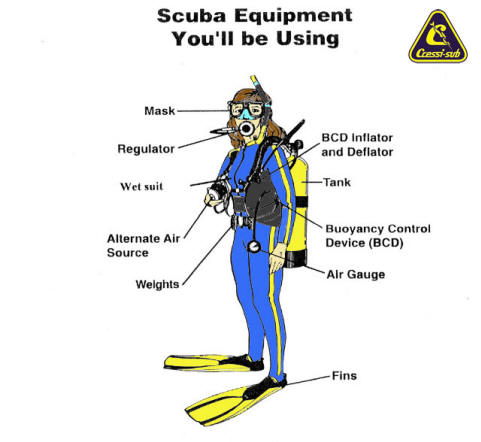
Well, that was terrifying. I don’t know what I was expecting, but it wasn’t stripping out of my BCD (buoyancy control device aka vest keeping me alive) and putting it back on again while 40 feet under the water. Looking back, it makes perfect sense that this certification is supposed to be stressful since its purpose is to prep divers for worst-case scenarios in the water, such as having a regulator knocked out of your mouth or being blinded by a leaky mask😓 It was basically a massive, self-induced stress test: “Can you do ‘x’ without losing your mind? Good. Now do ‘y.’”
The first day was hell, the second was terrifying, but the third was amazing. Hell consisted of six hours of theory and seven hours of confined water practice. It was too long. After taking my BCD apart and putting it back together for the fifth time, I was a bit done and toward the end, I was even too tired to be afraid. That part of my brain just wasn’t working, so when the instructor said: “Fall backward into the water,” I said: “Bye!” I might have even waved goodbye to him on the way down. Along with testing our endurance, we learned and practiced majority of the material this day, making the rest of the classes easier.
On the second day, we did everything from the first day again, but in the ocean with fish, poor visibility and currents. Basically, it felt like a completely different ball game and it was. Considering it was our first semi-solo dive, we did WELL. By that, I mean we didn’t panic or lose our heads when asked to do normally suicidal things like remove our air tanks and regulators while under the water. We calmly practiced: clearing face masks, locating lost regulators, removing BCDs, sharing air supplies, signaling and surfacing.
Just before being signaled to remove, hold and replace our BCDs; a current rushed the group, jostling and swinging the divers around. Obviously, these were not ideal conditions and life was a bit stressful. A fellow diver’s hand was hovering over mine and I grabbed it. We communicated our support through punctuated hand squeezes that said: “We can do this. We will do this. IT WILL BE OK.” Upon surfacing, the whole group burst out laughing for no other reason than that we were alive. #teambonding
Getting all the terrifying lessons out of the way, the third day was a breeze that reminded me why I was doing this in the first place. We were allowed to dive freely as long as we stayed close to the group. Curious divers, who strayed to look at cool starfish, would be summoned back to the school by the relentless rattle of our dive leader’s signaling device. (I never made it to the starfish😢)
This day, we mostly focused on buoyancy control and adjusting to varying pressure changes in the water, which Jeffrey, the dive center’s owner, demonstrated with meditative-like efficiency. He was with us this day, hanging around suspended in the water like a floating Buddha. No BCD, he just casually carried his air tank around between crossed legs in the middle of the water… Goals.
On this day, we also learned some flexible diving skills that are good to know, but not necessary for the certification. My boyfriend is responsible for this. He looked up a list of the skills the night before and decided he HAD to learn them. (He’s a bit of an over-achiever.) Therefore, the instructor began drilling us on: different diver tows for carrying an injured diver to safety and weight drops for fast surfacing. He also showed us how to swim 15 meters without a face mask and then replace it underwater. At this point, I sneaked up the ladder and away from danger, leaving my boyfriend to contend with his curiosity.
It was a struggle, but I’m very glad we did this. The certification has opened up a large part of the world to us that majority of people never get to experience. I know I can trust my significant other to take care of himself and not lose his head in the water. (Can you believe he used to be afraid of water?) I also know he can expect the same of me. The class was only three days, but we learned a lot, tested ourselves and are better because of it. Plus, we can swim like dolphins now😏
There are lots of locations in Taiwan to become certified and also lots of dive shops offering the certification. The three most popular places to get it done are Kenting, Green Island and Longdong Bay. Kenting and Green Island are beautiful vacation spots, whereas Longdong Bay is just convenient. It’s not very pretty and water conditions are less than ideal, but it’s only an hour’s van ride away from Taipei. If you’ve been scuba diving before and are just trying to get the certification done, it will do. However, if you’ve never been in the water before, I’d suggest Green Island. It’s Taiwan’s top diving destination and a direct contrast to Longdong Bay.
Join Diving Center
In case you’re curious, I looked at three different dive shops and reached out to two: Join Diving Center and Scuba Shop Taipei. Based on a friend’s recommendation we decided on Join Diving and couldn’t have been happier. Yes… it was torture, but they were thorough, good instructors with excellent communication skills and years of experience. We don’t speak Chinese, so there was a slight communication barrier, but they never lost patience with us, and did their absolute best to answer our many questions and make us feel comfortable. I highly recommend them, and we will use them again for future dives and possibly for getting the advanced diver certification next spring.