Showing posts with label World Heritage. Show all posts

11/29/17

Hong Kong: Day Trip to Macau


Apparently churches weren’t always white-washed, simple affairs and, before the bible was translated, they were adorned with skeletons, demons, angels and other scenes to remind the illiterate population what they were tithing for. I got to see my first example of this at the ruins of St. Paul’s Basilica in Macau. The only thing left of the 17th century church is the front facade, but that’s all that’s needed to see that this once one of the most prominent churches in Asia.

Macau is a famous day trip from Hong Kong for many reasons and the basilica ruin is just one of them. Today, the country is the gambling capital of Asia, but historically, its town squares and architecture are the oldest surviving examples of an assimilation of Western and Asian ideas. Macau was founded as a Portuguese colony in the sixteenth century and recognized itself as such all the way until 1999, making it both the first and last Western colony on Chinese soil.

The historical place was added to UNESCO’s world heritage list in 2005 and its architecture is a stark contrast to the towering skyscrapers and shiny modern feel of Hong Kong’s cityscape. We mostly stuck to the old towns and stuffed our faces with delicious Portuguese food, which was probably the highlight of the trip. We were bad tourists and skipped the casinos, despite telling ourselves that we would visit at least one.

In fact, from the arrival terminal, we taxied straight to the basilica and old town surrounding it. As mentioned, the basilica ruin was interesting, but the town had basically been turned into a giant outdoor shopping mall, featuring many international brands. The fort next to the basilica was a let-down as well. We were hot, bored and started acting like obnoxious tourists, climbing on canons and jumping off walls. I don’t blame the fort; it’s not its fault that it looks like every other fort we’ve ever seen.

From the Basilica we caught another taxi to the old streets of Tai-pa, which were very cute and delicious! Get lunch here. (This is important!) The street is lined with several nice traditional Portuguese restaurants, including Fernando’s and Antonio’s. The first option was closed, so we went with Antonio’s and loved it. We sat around for two hours eating and drinking the house wine, making it the high point of the day.

Getting Around


Ferries from Hong Kong to Macau depart every fifteen to thirty minutes and we probably didn’t need to purchase our tickets in advance, but did anyway. When booking, remember you can’t exchange tickets for a later time, but you can exchange them for earlier one. The whole trip only takes about an hour, so you can even sleep in a little before getting started. There’s also no need to worry about exchanging money as HKD currency is accepted everywhere.

10/16/17

Moon Festival: Chang'e and the White Rabbit


Many people have forgotten this holiday’s origin story, which is a shame because there’s a goddess, a drug-making white rabbit and CAKE! In fact, every person I asked had to Google it. Just so you’re aware, there are two stories: one with a hero and one with a villain. I’m going to stick to the “bad guy” version; because that’s the one I was told.

Once upon a time, there were ten suns. Of course, this was disastrous and everyone was in a foul mood all the time; then, everyone started to die because the crops wouldn’t grow. A hero named Houyi decided to fix the problem and shot down nine of the ten suns with his bow and arrow. The people were so happy and thankful that they made him king and everyone lived happily ever after….. I don’t think that ever actually happens.

As it usually does, the power of kingship turned Houyi into a greedy, tyrannical ruler who was having so much fun killing people that he decided it would be a good idea to live forever. He sought out the Queen Mother of the West for medicine that would make him immortal and SHE GAVE IT TO HIM; not her brightest moment as the immortal deity of prosperity, longevity and eternal bliss.

Houyi didn’t take the medicine immediately. Apparently, it would only work if taken on the fifteenth day of the eighth lunar month, so he had to wait. This gave his wife, Chang'e, a chance to steal it and, not wanting her husband to go on torturing people forever, she did. After taking the medicine, Chang'e became a goddess (reigning over the moon, menstruation and rebirth) and flew up to her lunar palace where a white rabbit was waiting for her.

Of course, Houyi was pissed and tried to shoot her down, but apparently kingship had destroyed his aim as well as his soul. Legend has it that he died soon after (probably from a rage induced heart attack) and everyone decided to honor Chang'e’s excellent thieving skills with the tradition of Moon Festival... (which has since been added to the UNESCO Intangible Heritage list or should be. I was told that it had been added, but then couldn't find any evidence of it online.)

So currently, there’s a rabbit and a goddess on the Moon. The immortal little fluff ball is spending eternity on the Moon so that Chang'e has someone to talk to and as punishment for giving out too many happy pills. The little one is the god’s apothecary and, under duress, he gave the Queen Mother of the West too many immortality pills, an action that makes him (slightly) responsible for Chang'e’s fate. Even today, people still “see” rabbits making moon shapes around the holiday in honor of their friend.

In addition to having a cool backstory, moon cakes and barbeques make this one of the most delicious holidays in Taiwanese culture. Traditional cakes are “moon” shaped and filled with a sweet, dense filling that has a salted egg yolk in the center. Historically, the treats were sometimes used to smuggle secret messages across enemy lines. In recent years, they have gone more main-stream and many large chains, such as Godiva and Starbucks sell seasonal mooncakes. Chocolate and lotus flower flavors are best!

6/6/17

Dragon Boat Festival: One of Asia’s Oldest Holidays


Once upon a time, thousands of years ago, during one of China’s many internal feuds, there lived a king and a poet. They loved each other very much, but many people were jealous of the king’s affections and spread rumors that the poet was working for the king’s enemy. Of course, the poet lost the king’s favor and was banished.

As in any good tragedy, he wrote sad rhymes for the rest of his days until hearing that his king had been defeated, at which point he promptly drowned himself in a river. People dragged the river with their boats looking for the poet’s body and threw rice balls into the water hoping to distract the fish from eating his remains. According to the story, the body was never found, but the tradition of racing dragon boats and eating zongzi began.

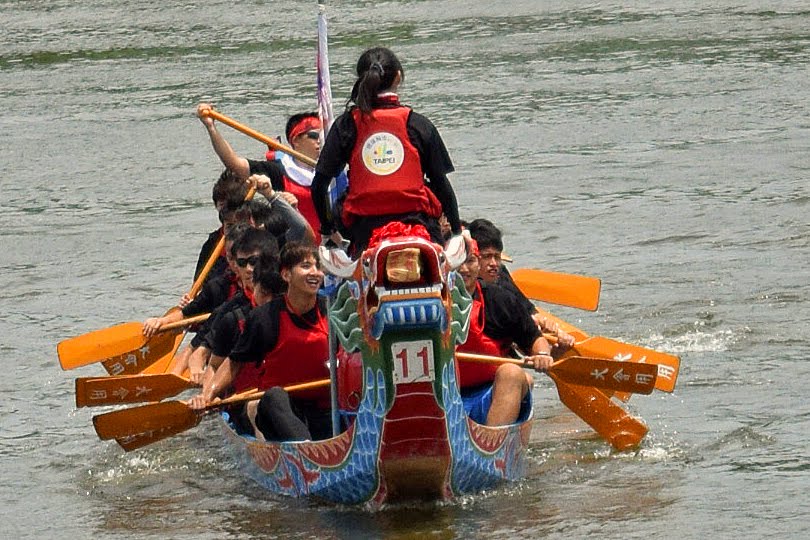
Originating over two thousand years ago during the Warring States period, Dragon Boat festival is one of China’s oldest holidays and was one of the first events to be added to the UNESCO Intangible Heritage list. Today, it’s become an international sporting event and teams from all over the world come to try their luck in Taipei, which hosts the largest Dragon Boat Race in Asia. During the event, boats line up and race to grab their team’s flag.


Of course, each boat is brightly painted as a dragon and there’s even a special eye painting ceremony the night before a race to bring a boat’s dragon to life. Each boat is loaded with a crew consisting of a flag grabber, drummer and rowers. The drummer acts as the dragon’s heartbeat while the flag grabber has the fun job of pretending to be the dragon’s mouth, stretching out over the dragon’s head to grab the flag.

Dragon Boat Festival is officially recognized as the fifth day of the fifth month of the Chinese Lunar year, which means that the holiday can occur anytime during the month of June or even at the end of May. There are dozens of locations to watch the races in Taiwan including Keelung, Kaohsiung and New Taipei City, but the international championships are held at the Riverside Park in Taipei.

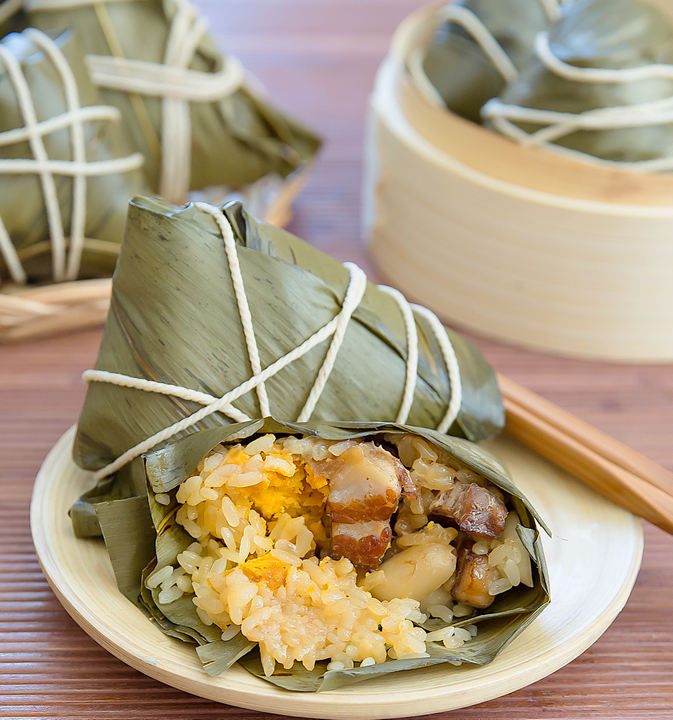
In addition to watching the races, other favorite dragon boat traditions include eating zongzi (sticky rice wrapped in bamboo representing the rice balls that were thrown into the water over 2,000 years ago), balancing eggs at noon and wearing scented sachets that in days past would have been useful for keeping bugs away and preventing the spread of disease.

11/30/16

Kyoto Day Trips: Nara and Horyuji


"Let go of my shirt! Stop butting me in the ass! No, I don’t have food for you!" Honestly, you can talk at them all you want, but the deer at Nara will neither understand or care. Also, you had best give them what they want or they may put in a bad word about you with their supernatural friends. These tiny, annoying, but cute animals are believed to be messengers of the gods. In fact, they are so revered that in the whole of Nara, there is a ban on hunting them. You can guess what happened next. The giant rats reproduced unchecked and now thousands of them freely (and without fear) roam around Nara.

Most of them have the good sense to stay in or around Nara Park where there are vendors selling deer snacks and plenty of tourists to buy their wares. However, some can be seen walking around the city proper. Thankfully, vendors and shop owners keep brooms handy and are consistently on the lookout for scat. It’s hard to find a bigger foot traffic deterrent than a pile of poo on your doorstep. Wow, this blog is not headed where I thought it would be. We’ll come back to the deer later.

In addition to getting in touch with your inner Artemis, this trip is also about history and wood, specifically wood buildings. The world’s oldest wooden structure is located just outside of Nara and the world’s largest wooden building is actually in Nara Park. That’s right! You guessed it. They are both World Heritage sites. Horyuji, the oldest one, was actually Japan’s first recognized World Heritage Site, which was quickly followed by many more. Both of the buildings are Buddhist temples and at one time, Todaiji (the largest one) was the most powerful Buddhist temple in Japan.

Horyuji 


Start your day at Horyuji. Be warned, this will be the most expensive temple you tour in Japan. They charge $100 JPY per century and its 1,500 years old. Once you do the math, it is worth a visit. This is the oldest building I’ve ever seen by a thousand years, making Jamestown and Himeji Castle seem like architectural infants. Of course, bits and pieces of the temple have needed to be replaced over the years, but the original structure still stands and some of the replaced pieces, such as eaves, are on display in the temple museum.

As you walk around the complex, you’ll have to admit that the temple and pagoda both look pretty good for being almost 2,000 years old. Considering Japan’s history of earthquakes and fire bombings, it’s amazing that they are still standing, let alone looking clean and sturdy. By the looks of them, both buildings will probably outlast our lifetime. These monks know what they’re doing.

Currently, the pagoda is being used to house statues that predate the complex. I know this because visitors are allowed to peek inside and have a look at their worn faces. The indoor, directional lighting of the pagoda creates shadows and an intimately eerie setting. As if from any one location, you can’t ever see a statue’s entire face. I digress, the point is that there is much more to Horyuji than just an old building to see.

Nara


After touring the temple and taking a stab at mindfulness, it’ll be time to head back to Nara for more temple trekking and deer frolicking. Before venturing out of the station, grab lunch. You’ll have your choice of sushi, katsu, curry and other Japanese favorites. Honestly, I miss katsu terribly and wish Taiwan could learn how to cook pork properly. Take your time while eating, you’ll need strength for the afternoon’s adventures, which may begin by having to run after a deer that is triumphantly galloping away with your map. To get started, catch the sight-seeing tour bus from Nara station to Todaiji Temple. It’s a short inexpensive ride and the buses run every ten minutes. There’s no need to go looking for deer, they will find you.

On your walk to Todaiji Temple from the bus stop, deer will start to randomly follow you, nosing your bag and occasionally butting you in the legs. It’s incredibly adorable, because they are tiny and have been de-horned. But seriously, my dog is better behaved than this. On second thought, that’s probably to be expected. Also, the humans are just as bad. Occasionally, you’ll see deer lying down around the park, trying to rest. At which point, visitors rush over to try and get selfies with them. Be careful which deer you choose to pose with. Does tend to spook more easily, but are definitely cuter. Whereas, the bucks won’t spook, but they may decide to tackle you while your back is turned. These deer are not above fighting and will sometimes attack silly humans.

When you’re done pretending to be Diana, have a look around Todaiji Temple. You do have to pay to get in, but the price is a reasonable $500 JPY. Basically, it’s a large temple with large statues. There are many statures inside the temple, but the most famous one is the bronze Buddha. In fact, you have the pleasure of viewing the largest bronze Buddha statue in the world. It just so happens that this Buddha is protected by Japan’s most famous guardian statues. With their fierce expressions and giant proportions, these statues actually made more of an impression than the Buddha. Their presence is enough to make anyone think twice about messing with the Buddha, even if it does have a giant tempting door in the back of its head.

Upon exiting the temple, you can continue your tour around Nara Park or do what we did and abandon the rest of the day’s plans in favor of some free time back in Kyoto before dinner. Both are excellent choices. If you decide to stick it out in Nara, make your way to Kasuga Taisha Shrine and then finish up with Kofukuji Temple before catching the bus back to the train station. Both of these sites are located within the park and I’m sure the deer will keep you company as you make your way around.

Kasuga Taisha Shrine is famous for its thousands of lanterns and Kofukuji Temple is home to Japan’s second tallest pagoda. These places sound pretty cool and I’m a little sad that we didn’t stay to check them out, but only a little. Kofukuji is supposed to be one of Nara’s top three temples (the other two are Todaiji and Horyuji), so you may want to at least grab that one on your way out.

One last thing to consider when planning your trip to Nara is Nara Dreamland. Google It. We opted out because of the $50,000 USD fine, but you should at least be aware that it exists. You’re welcome.

Getting Around


This is one of the easiest trips you can make from Kyoto. Just hop on the train. There’s absolutely no need to reserve tickets because the trains run so frequently. In fact, I don’t even think you could reserve tickets if you wanted to. Also, all the trains are covered by the JR Pass. If you don’t have a pass, don’t worry about it. Nara is only 45 minutes away and tickets are reasonable.

To get to Horyuji, take a train from Kyoto to Nara Station. Once there, transfer to a local train going to Horyuji station and get off. It’s a short ride and the trains run frequently. From here, you can either take a bus or walk to the temple. To fit everything in, you’ll need to leave Kyoto station by eight or nine in the morning. Also, try to finish up Horyuji by eleven or twelve and be on your way back to Nara for lunch. If you plan to see everything, you’ll need most of the afternoon for the other temples. Have fun and say “hello” to the big rats for me.

11/21/16

Kyoto Day Trips: Himeji Castle and Princess Sin


Before even seeing the old castle, we heard stories about its history and got the feeling that there was something unique going on behind the white walls. For those who haven’t heard the stories, Himeji is Japan’s oldest remaining castle that hasn’t been touched by war, fire and earthquakes. During World War II, the Himeji area along with the rest of Japan was heavily fire bombed. The area surrounding the castle was completely destroyed and a bomb did land on the castle itself, but it did not explode. After learning this, you start to think that there’s something special looking out for this old keep.

Then, you learn that Himeji castle withstood a record breaking earthquake in the 1950s. Again, the entire area around the castle was destroyed, but not one building inside the keep fell. If you bother looking further into the castle’s history, you will, also, learn that Himeji Castle has never once been locally attacked or under siege since it was constructed 500 years ago. By this time, your original inclination that something is looking out for this castle is confirmed and you start to wonder how many bodies are buried under the foundation. Just kidding, this isn’t Europe after all.

Upon actually seeing the castle, you start to understand some of the structure's good fortune. Put simply, it is very well built. The fortress is firmly positioned upon a hill that gives a clear view of the surrounding area. Like any good feudal castle, it also comes standard with overlapping guard walls, archery cubbies, iron gates and varying moats. It’s definitely enough to give any would-be attacker pause.


On top of which, anyone trying to storm the keep would have had a hard time burning their way through. The keep’s walls are covered in plaster. While this material does burn, it doesn’t go up in flames nearly as fast as bare wooden walls, which is what most other historic Japanese castles are made of. It never happened, but a hypothetical attacker would have quickly learned that there are easier walls to breach.

In contrast, today, it’s quite easy to explore the inside of Himeji castle. That’s right. They let you inside. They even let you go all the up to the sixth and tallest floor of the keep. There’s just one thing: You have to take off your shoes, which is fine. Just be careful not to fall. The wooden floors of the castle are worn shiny and smooth from heavy foot traffic, making it all too easy to slip and slide around in sock feet. Yeah, that happened. More importantly, it happened in a 500-year-old castle, which is just awesome.

Apart from the temptation to go skating across the castle floors, the inside of the keep is surprisingly warm and inviting. The space is softly lit by a spattering of tiny windows and the smell of well-oiled wood follows you as you make your way to the top of the keep. On your way up the flights of stairs (being very careful not to slip on the steps), you realize even more that this structure was designed to accommodate soldiers and serve as a last stand. Each floor is designed with a trap ceiling and the inner rooms of the keep were all used as armories. You can still the ancient hooks on the walls where weapons were once stored. That said, soldiers stationed at the keep didn’t really have that much to do. I imagine all those weapons were really shiny.

From what I understand, majority of the soldiers actually lived in the keep’s fortifying walls. A portion of these are also open to the public. The old wooden rooms in the walls now serve as a makeshift museum, displaying artifacts and teaching tourists about the history of the castle. This is where you learn about the transformation of the castle from a small wooden building on a hill into a six-storied keep, as well as about Princess Sin. Every good castle has a princess story and Himeji does not disappoint.

The story begins with the princess’s first wedding. After her marriage, Princess Sin and her husband moved to Osaka castle. Unfortunately, Osaka castle is not under the same powers of protection as Himeji keep. Shortly after their wedding, the castle was seized and Princess Sin’s husband died defending it. (In Japanese history, he is portrayed as the ultimate Black Fish.) With help, his wife was able to sneak away and escape back to Himeji. She was escorted home by a feudal lord who commanded a large fleet of ships.

The story goes that Princess Sin fell in love with the lord on her journey home and married him while still at sea. So, you see, fairy tales do happen and the couple lived happily ever after at Himeji for a few years at least. You’re about to learn why most fairy tales end after the wedding.

With her second husband, Princess Sin bore both a son and daughter. Her son fell ill and died young. After which, the princess suffered through a consistent string of miscarriages and still births. In response to this, Princess Sin drowned her grief in religion. She prayed, prostrated and had many shrines built. As a reward for her efforts, Princess Sin’s husband fell ill and died and early death. The princess never bore another healthy child.

At this, a person of less strength and character would have turned on their religion, but not Princess Sin. She cut her hair, changed her name and left Himeji to live out her life as a Buddhist nun. She wasn’t blessed with an early death either. The princess would carry her loss until she died of ripe old age in her seventies. Are you crying yet? This is not the story I had signed up for when starting to read about a happy little girl who lived in Himeji. Give me my $1,000 back!  (I’m kidding, kind of.)

It does cost $1,000 JPY ($10 USD) to tour the keep. Apparently, they charge $200 per century. The castle is open from nine to five every day, except for two days in December, the 29th and 30th. It does not close for national holidays and you don’t have to worry about organizing your trip around its hours. Located about an hour from Kyoto, Himeji castle is also very easy to get to. Try to leave around nine in the morning and reserve your seat on a Hikari train in advance. You can do this at any JR station. It does not have to be in Kyoto. If visiting the castle on a weekday, you can wait and purchase you return ticket on the fly from Himeji station. However, if you’re visiting on a weekend or holiday, it is recommended that you collect these in advance as well. Allow at least five hours to tour the castle and grab something to eat. So, if you arrive in Himeji at ten, book your return ticket for three in the afternoon. If you want to explore the actual town, add another hour or two to your trip.

From the train station exit, you can’t miss the castle. It’s literally straight ahead and looming over you. You certainly don’t have to worry about getting lost. Though, I’m sure some people still manage to.  If you want extra protection against getting lost or are just tired of walking everywhere, there is an inexpensive loop bus that runs every ten minutes between the station and castle. To save time, we took the bus down, and then walked back. At a casual stroll, it took about half an hour to reach the station.

One last thing, eat at the restaurants located across from the palace. When you get hungry (and you will), these shops offer a delicious variety of katsu, curry and other Japanese favorites. More than likely, you’ll be back in Kyoto in time for dinner.

Next to Hiroshima and Miyajima, Himeji castle was one of our most memorable experiences in Japan. On the train ride down, we didn’t know what to expect. Honestly, we thought it would be a little lackluster and small. The white castle couldn’t possibly be as beautiful as the postcards made it out to be. We couldn’t have been more wrong. Physically, Himeji castle exceeded our expectations and its colorful history captured our imaginations. I’m so glad to have stood beneath the castle's white walls before its luck runs out. It’s bound to happen sooner or later.

11/15/16

Kyoto Day Trips: Hiroshima and Miyajima


Two world heritage sites in one day may not seem like such a big deal when visiting Japan. However, quality is more important the quantity and this is without a doubt the most powerful trip you can make while in the country. The artifacts and personal stories at the Peace Memorial Museum are quite moving, which is a massive understatement. Essentially, you’ll be fighting the urge to vomit and cry all at the same time. The idea of how ridiculous it would be to lose it will help you keep it together, at least until you see a grown man with tears in his eyes exit the exhibit. Then, your only salvation will be quickly (and quietly) streaming YouTube videos of cute puppies falling down stairs.

About an hour away from the tragic memorials of Hiroshima, stands one of the most unique and beautiful shrines in Japan. Miyajima shrine is famous for its massive tori gate, which stands stoically in the harbor. At low tide, the ground beneath the gate is completely dry and many people can be seen walking under its giant arch. However, the gate is most beautiful at high tide when its reflection can be seen bouncing off the water below it. Being able to experience both of these great heritage sites in one day is an unforgettable experience and an absolute must if you have the chance.

Hiroshima


You’ll want to start your day in Hiroshima. From the train station, take the sightseeing tour bus to Peace Memorial Park and hop off. You’ll see the museum in front of you, start there and then work your way through the park. The entrance fee to the museum is quite cheap, only $200 JPY per person. Actually, this price is reasonable when you realize that you’re paying money to make yourself cry and feel like a terrible human being. That said, don’t skip the museum. It doesn’t take long to walk through and it’ll give you a better understanding of the other memorials in the park, allowing you to appreciate them more.

As I’ve already said, the museum is a little bit of an emotional strain. Its display cases of burned clothing, body parts and personal stories have a more profound effect than the actual Dome. The most moving story archived in the museum is of Sadako Sasaki. She was two years old when the bomb went off and (unlike her sister) appeared to have fortunately survived the blast. She went on to have a perfectly normal life, excelling at sports and sports.

Suddenly, Sadako developed leukemia as a teenager. There’s an old Japanese belief that if you fold 1,000 paper cranes, your wish will come true. Sadako did this and her tiny, perfect paper cranes are on display at the museum. Very few people look at them with dry eyes. Sadako died, but her paper cranes survived and started a movement. Even today, thousands of paper cranes pour in from all over the world and are hung at the Children’s Peace Memorial, which stands across from the museum.

After exiting the museum, the Children’s Peace Memorial will be the next thing you see. The first thing you notice about it will be the colorful long dresses hanging behind the memorial. Upon closer inspection, you’ll see that these are actually countless numbers of paper cranes. Some of them (most of them probably) are made in Japan, but they come from everywhere, including from schools in the United States. (Imagine how cool that class would be: Let’s learn how to make origami and then send it to honor children located, literally, around the world.) We were fortunate enough to see groups of school children adding even more strands of cranes to the memorial. Seeing their innocent faces memorializing the dead was enough to make us lose it again and we had to walk/run away.

From the Children’s Peace Memorial, the next part of your visit is the actual Dome, which was located directly under the small sun created by the bomb. These are the original remains and you don’t have to look closely to see the warped iron and scorched brick from the blast. It’s still hard to imagine that this damage happened in a matter of seconds, not decades. Thanks to your time at the museum, you’ll understand just how powerful the blast was, you’ll know that no one was spared and how some people were incinerated from the inside out.

After learning why you’ll never support anything remotely nuclear, it’ll be time for lunch and you’re in the perfect place for it. The Dome is right beside one of Hiroshima’s more popular downtown shopping streets. Just walk down until you see Hondori Shopping Street and turn there. You’ll find the local fare of katsu, ramen and sushi, but you’ll also see some cute little cafes. There’s even a Starbucks hidden away down in the subway entrance, which was great for us. Hiding out in a dark corner with some chocolate and coffee was the perfect way to hit the reset button on the day.

We reemerged topside about an hour and a half later ready to go. Wait around and head back to Hiroshima station around two in the afternoon to head to Miyajima.  If you have some time to kill, check out some the stores on the shopping street before catching the bus back to the station. After a little exploring, you’ll see that there’s more to Hiroshima than just its history. It has turned itself into a nice, clean city with an eclectic vibe.

Miyajima 


To get to Miyajima, catch the local train at Hiroshima station and get off at Miyajima. It’s a about a 45 minute ride to get there and the trains run every ten to fifteen minutes.  From Miyajima station, walk down to the ferry. You’ll be able to see it from the station exit. It’s just a five minute walk away. The ferries, also, run every ten to fifteen minutes and will take you straight to Miyajima. Once on the ferry, you’re basically there. It’s just a short, fifteen minute ride to the island.

Miyajima is much more than a Tori Gate. There is a proper temple complex, pagoda and even a gondola if you’re interested. The island is, also, crawling with deer. Thankfully, they are a little better behaved than the deer at Nara and just as cute. Hang out, watch the tide roll in and explore until five thirty. At this time, you’ll need to catch the ferry again and head back to Hiroshima station for dinner.


Okonomiyaki 

As we learned, Hiroshima station is home to some great eateries and makes for an awesome place to try the local specialties. Restaurants are located on the second floor of ASSE, one of the malls attached to the station. Take this chance to try okonomiyaki. It’s a local dish that is directly associated with the Hiroshima area and it’s pretty good. Basically, the dish is made with everything you could want: fried egg, bacon, noodles, lettuce, bean sprouts, etc.

The best part is that all of the things listed above come standard, but then, you can add more! You can request your okonomiyaki to be made with shrimp, oysters, cheese or whatever else the cooks have hiding behind the counter. Hiroshima is also famous for its oysters, so I tried the local dish with the local fish. Honestly, not a fan and I picked most of the oysters out. Minus the slimy oysters, the okonomiyaki by itself was delicious. I would definitely order it again just maybe with shrimp next time. It’s hard to go wrong when eating in Japan. After a hearty meal, it’ll be time to start your journey back to Osaka and/or Kyoto.

Getting Around


Everything is covered by the JR Pass. Literally, everything is covered, including the sightseeing bus in Hiroshima and the ferry in Miyajima. It’s great! If you have the pass, this will be one of your cheapest days in Japan. In fact, I probably wouldn’t attempt it without some sort of discount train pass. In addition to the JR Pass, there’s at least one more area specific pass (the Kansai Hiroshima Area Pass) that you can get, but it won’t work on the ferry or bus. It, also, will not cover your journey from Kyoto. Essentially, passengers using this pass have to begin and end their trip in Osaka, which is where the pass takes effect.

To get to Hiroshima on time, you will need to take a Hikari train from Kyoto at eight in the morning or from Osaka at 8:30. This is a high speed train that will take you straight to Hiroshima station. You’ll arrive in the city around ten o’clock so prepare for a late lunch.

Getting to Hiroshima from Kyoto is easy. Getting back is slightly more difficult. There is no direct train that goes from Hiroshima to Kyoto. You will have to take a train to Osaka and then transfer. This is not a big deal. It’s very easy to get a local train from Osaka to Kyoto and the ride only lasts about half an hour. The local trains run every ten to fifteen minutes.

Let’s talk about the elephant in the room: getting from Hiroshima to Osaka. You will have to take a Kodama or Sakura train. There is no Hikari train available for this part of the trip. Make sure you get a Sakura train. It’s slower than a Hikari, but still bearable. A Kodama train is doable, but it is insufferably slow, as we learned the hard way. It’s one thing to stop at every station. It’s another thing entirely to stop at every station and then wait around five minutes for no reason. Thank goodness for the internet. If possible catch your return train home around 7:50 or 8:00 at night.

You can reserve these tickets in advance and I suggest that you do. To reserve seats, just show up at any JR station help desk with your rail pass and they’ll help you find the seats. Again, make sure you’re on a Sakura train for the second part of the trip.