7/16/17

Cliff Jumping: Lingjiao Waterfall


Stand around for an hour contemplating life with a strange mix of fear and philosophy, then JUMP! This is what a friend experienced before leaping 40 feet from the top of a waterfall into the pool below. (I didn’t do it. Apparently, old age has dampened my desire to die.) Another said that he would wait for his brain to become slightly confused and then run off the cliff before clarity and sanity could catch up with him. (I date that one 😢) He did this 4 times. According to both, the first time is easiest, since after that the brain has figured out what you’re doing and doesn’t approve.

Resting at twelve meters, Lingjiao Waterfall might be the highest cliff jump in Taiwan, and, of course, (as stated above) we’re slightly disturbed, so this is the one we started with. It’s higher and maybe even more beautiful than Hong Kong’s most famous cliff jump, Sheung Luk, which we are hoping to visit in the not too distant future. Unlike Sheung Luk, Lingjiao has managed to stay off the radar for most tourists and even locals. Except for a group of regulars, who looked like they’d been there a thousand times, we basically had the beautiful spot to ourselves… on a weekend… in July.


We brought water, wine, bread, cheese, and spread our towels out to enjoy a lazy afternoon swimming and jumping. The locals brought the music and, unwittingly, showed us where to stand and what spot to aim for when making the jump. If they hadn’t been there to demonstrate, I can’t say for sure that our group would have tried it. Twelve meters definitely looks like 20 from the top and you can’t see what’s waiting for you at the bottom.

The top of the waterfall is calm, peaceful, pretty and the perfect place to spend an hour in reflection before giving in to the chaos of an adrenaline rush. Overall though, the whole area needs a little TLC. There’s some debris piled up on the side that makes for a rough first impression and the trail to the top is completely overgrown. I seriously doubt that it’s maintained by anyone except the regular jumpers. They did spend a little time clearing it while we were there, mostly just smashing everything down and (probably) praying not to step on a snake.


If more people visited, it would probably be better maintained, but then it would also be more crowded, so pick your poison. Actually, someone did try to turn it into a tourist attraction, but rumor has it that the endeavor was shut down after a boy jumped and died. This would have obviously created a lot of bad press and scared visitors away, especially locals who believe in the Chinese superstition that water is haunted by soul-stealing ghosts. Anyway, you can still see the hollowed out ruins that were never completed, which give the place an eerie vibe.

To us, the jump seemed intimidating, but safe. Someone could land poorly in the water and end up with a few bruises, but the whole pool itself is very deep and no one in our group touched the bottom. As long as you can swim, go for it. When not jumping, it’s also nice to swim under the cliff and scramble up onto the steps. This is a cool, wet place to hide from the sun and it gives you the high ground for a surprise attack when friends come and try to pull you off… Big Mistake.

Getting Around


It’s on the Pingxi Line, exactly one stop from Pingxi Village actually, so you could also squeeze in a visit there or to Shifen Waterfall on this trip. We considered exploring Wanggu Waterfall, since it is also only one stop away, but ditched this plan when some unexpected new friends, who had just come from there, dropped in and told us how the waterfall is much smaller and that no one at all was there swimming, much less jumping.

I digress, take the bus there, but come home on the train. It’s bus number 795 and it departs every half hour from Muzha Station on the brown line. To get to the bus stop, exit the station and cross the street to the OK Mart. Fun fact, this bus stops at every major attraction on the Pingxi Line, including Lingjiao, which is where you want to get off. From there, follow signs for the Lingjiao train station, which is about 500 meters away (other blogs lie about this distance for some reason) down a small side road.

From the station, follow signs for the waterfall, which is only an additional 300 meters away. The trail for the waterfall starts at the Lingjiao Visiter Center (or at least an abandoned, nonfunctional cement building that says it’s a visitor center) and then follows the train tracks until ending at some stairs that lead down to the base of the falls.

To get home, jump on the train (no matter which way it’s going, because there’s only one ping-ponging back and forth along the Pingxi Line) and get off at Houtong Station, where you can transfer to a local train bound for Taipei. The bus ride’s under an hour, whereas the train takes two hours, but I still recommend the train because traffic gets bad on the weekends and you’ll have a better chance of finding a seat.


7/3/17

Hiking Yushan (Jade Mountain): Taiwan's Highest Peak


I get it. I completely understand how people who have never hiked before suddenly become altitude junkies within a year or two of living in Taiwan. The little island, about half the size of Virginia, is home to over a hundred 3,000m+ peaks and the most popular one to start with is Jade Mountain, which gets everybody hooked. Along with being Taiwan’s most popular hike, Jade Mountain is the highest peak in Taiwan and Eastern Asia. With a height of 3,952 m (12,966 ft.), it’s also the 27th most prominent mountain in the world, and my first experience with high altitude hiking.

I trained for one month and hike regularly, but knew the game had changed when one of our group members mentioned that he had just spent a week hiking around Everest’s Base Camp and the GIRLS who had gotten altitude sickness. (Thanks for that by the way, it made me feel so much better.) Obviously, he was one of the first to summit and I was one of the last, but the fact remains: I DID THAT and there must be something wrong with me, because I’m already planning my next high altitude ascent.


Jade Mountain is great for beginner altitude climbers, because it can be spread comfortably across two days and only requires hikers to carry 10-12 kg (22-26 lbs.). The mountain has two lodges, so tents aren’t necessary and neither are sleeping bags, which can be rented on site. Portering companies, also, send food and kerosene up the mountain daily so hikers can purchase meals at the lodges.

Serving more hikers than any other trail, the Jade Mountain lodges are revered as the best on the island. Instead of sleeping bags, the first lodge rents out weighted blankets and pillows (ACTUAL PILLOWS). I slept like a baby. For $300 NTD ($10 USD), the second lodge gives out nice down sleeping bags and fleece blankets. Interestingly, the second lodge is completely off the grid. Water is pumped in from a nearby river and the lights run on solar power. I was able to drink tap water for the first time in two years. In addition to this, it’s rumored they’ll be setting up some wind turbines in the near future.


Access to the summit is limited to 90 people a day and, of course, everyone needs two permits, which can be extremely difficult to come by. Also, the permits, lodging, meals and sleeping bags all have to be booked separately through different companies. For example, the food has to be booked directly through the portering companies and isn’t included in the price of the lodge. The sleeping bags are rented directly from the lodge, but as a separate transaction, so you have to remember to book it with your bed. Also, if you don’t get a receipt number, your reservation and money might be conveniently lost. Complete disclosure, just writing about it is giving me a headache and I’m super glad we joined a group instead of trying it alone.

There are lots of different organizations and people offering trips up the mountain. Trips are expensive (about $300 USD), but everything is included (even transport from Taipei) and they do all the paperwork, which (as mentioned above) is a huge pain. Ours was organized by trekking author, blogger and expert Richard Saunders, but lead by Mark Roche, the owner of Blue Skies Adventures and Saunders’ boss.


It was Roche’s 42nd trip up the mountain, so he was prepared for everything and full of good advice, such as how to ward off altitude sickness with ginger tea. (I love ginger tea, so this was great news.) Roche also has a favorite dead tree named Freddy, after Freddy Kruger. Again, I was usually bringing up the rear, so I got to talk with Roche more as he always tried to be the last one off the trail.

In addition to Roche and Saunders, other trekking companies organizing Jade Mountain trips include: Taiwan Adventures and Taiwan Adventure Outings. Yes, they are two separate companies. Taiwan Adventures has been around longer and has a good reputation for high mountain climbs, especially Snow Mountain. Taiwan Adventure Outings is a newer outfit that just took their first trip up Jade Mountain this year. That being said, the pictures from their trip looked great and I don’t think anyone died.


Speaking of dying, that happens. According to Roche, people die every year on the mountain. He alluded that the deaths were mostly older hikers and could be contributed to heart failure. Regardless, this climb is easily the scariest and most beautiful thing I’ve ever intentionally done to myself. Once you get over the scary, it’s an awesome (the original meaning) hike with mountain landscapes and shaded forests to keep you company.

The high altitude terrain is littered with firs, pines, hemlocks, mountain laurel, rhododendron, and edelweiss. This was the first time I’ve smelled pine needles since moving to Taiwan. Being as homesick as I am, the stupid things almost made my eyes water, as did the view on multiple occasions. (It’s unfair really, because in novels the girl who cries at beautiful things is such a romanticized idea, but in practice it’s awful, especially when the girl is trying to pretend to be a badass mountain climber, which she is not, and tears are not going to help the image.)


In distance, it’s not a very long hike, just 11 km from the trailhead to the summit. It’s the elevation that gets you and it literally takes two hours to hike what a person normally runs in ten minutes. There are two rest areas on the trail at the 1.5 and 5 km markers. They’re great places to have a snack and catch your breath. The summit lodge is at 8 km. If attempting a sunrise summit hike, most hikers stop here to sleep and eat before continuing on at two or three in the morning.

The final 2.4 km leading to the summit is a steep scramble with lots of windy cliffs, but there are chains and cages in place that make it feel relatively safe. A plus to doing the sunrise hike is that you can’t see how far you have to fall until on the return trip. It’s hard to believe that human beings actually do this for fun: "Let’s relax by standing two inches from certain death in the dark on the side of mountain almost 4,000 m above sea level.” You know what the stupidest thing is… I’d do it again.

6/28/17

English Cram Schools in Taiwan: An Introduction


Taiwan is not suffering from a lack of English schools. In Taipei alone, there’s practically a cram school on every block. Pick any one location in the city and you are probably within walking distance of four different English schools. The trouble is knowing which school is the best fit for you. English teachers also need to watch out for scams. There have been some cases of schools refusing to pay as well as some that have accidentally let a teacher’s ARC expire.

The Schools

Here’s a few well-known cram schools around Taiwan: Kojen, Shane, Hess and Joy. Each organization is slightly different from the others. For example, HESS pays the best, but also has the biggest class sizes. Joy and Shane seem to be the most popular choices for English teachers and have good retention rates (unlike HESS). Kojen is worth checking out as well. I haven’t heard anything negative about the school.

These organizations have two different types of schools: franchises and direct teaching establishments (DTEs). Franchise schools are owned and operated by local Taiwanese managers, whereas DTE schools are operated directly by the companies. As a general rule, teachers have the best luck working for DTE schools. There’s more oversight, accountability, and the pay is generally better.

However, there are some perks in working for a franchise as well. There’s more flexibility in hours, dress code and vacation time. In the end, the choice is yours. Don’t be scared away from franchise schools by the horror stories of other teachers. Some of the managers are really nice and will bend over backward for you. That being said, I’d still go with a DTE if you can.

In addition to running cram schools (or after-school schools) for school-aged children, each of these organizations also runs preschools. If you love working with kids, preschools are the way to go, since the hours can be more reliable than at a regular cram school. Unlike traditional cram schools, preschools are run during the day, so teachers have a relatively normal schedule with free nights and weekends. Giraffe and Kid Castle are other well-known preschools around Taipei.

If your interested is working with adults, your options will be a bit slimmer. These schools do exist, but they are usually smaller and privately owned. There is one I can recommend in Banciao, called The Language Academy, which only caters to teenagers and adults. As far as I can tell, the teachers absolutely love the students, but management can be a bit difficult at times.

Along with cram schools, foreign teachers are encouraged to apply at public schools. If you have an Education degree, go for it. It doesn’t matter what your Education degree is in; they will hire you anyway. The teachers I know working in the public schools have nothing but good things to say. It’s easy work, with lots of free time and paid vacation. The one complaint they have is not being able to get to know the students and see them progress. The class sizes are just too big and teachers only have the students for a short amount of time each day.


Hours and Compensation

Generally, English teachers work between 20 and 25 hours a week. For a teacher who is just starting out, $560 dollars should be the absolute lowest you accept as an hourly rate, unless the school has some other kind of amazing perk, such as a $40,000 contract completion bonus. Teaching contracts do generally include a completion bonus. These can range between $12,000 and $28,000 NTD.

Some managers will opt to give teachers a higher hourly wage instead of a bonus, so be sure and run the numbers before signing a contract. In addition to a contract completion bonus, teachers are also given a yearly raise. A good raise would be $50 or $60 NTD, so start bargaining around there. Keep in mind that teaching salaries are usually capped at $700 or $800 NTD per hour. If you find a job offering more than that, take it.

Areas outside of Taipei, such as Tainan, pay better and offer more perks, such as paid time off. Speaking of time off, teachers are generally offered 14 or more vacation days and are off on national holidays. In addition to this, teachers are, also, usually given time off between their contracts. All of this time is unpaid, unless you work for a public school or somewhere outside of Taipei.

Conclusion

As stated above, to work in a public school, you need to have an education degree. To work for a DTE school, it’s best to have a CELTA or TOEFL certification. These certifications will, also, make it easier to find a job online. Definitely start applying before getting to Taiwan. I know HESS, Shane and Joy all have an online application process. If you’re already on the ground in Taiwan, you can apply directly to franchise schools. As long as a teacher looks western, these schools don’t seem to be too picky.

I’ve had a number of friends arrive in Taiwan and find work within a week. You just need to be willing to do the legwork. There are hundreds of excellent English cram schools; the ones mentioned in this article are just the most popular places to start. English teachers usually work for Shane or Hess for a year or two and then transfer to a better privately run school they found in their neighborhood or through a friend.

6/6/17

Dragon Boat Festival: One of Asia’s Oldest Holidays


Once upon a time, thousands of years ago, during one of China’s many internal feuds, there lived a king and a poet. They loved each other very much, but many people were jealous of the king’s affections and spread rumors that the poet was working for the king’s enemy. Of course, the poet lost the king’s favor and was banished.

As in any good tragedy, he wrote sad rhymes for the rest of his days until hearing that his king had been defeated, at which point he promptly drowned himself in a river. People dragged the river with their boats looking for the poet’s body and threw rice balls into the water hoping to distract the fish from eating his remains. According to the story, the body was never found, but the tradition of racing dragon boats and eating zongzi began.

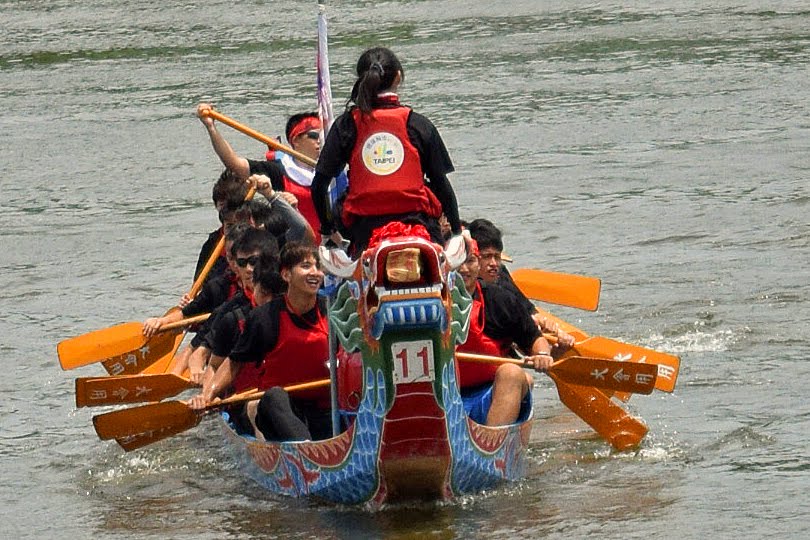
Originating over two thousand years ago during the Warring States period, Dragon Boat festival is one of China’s oldest holidays and was one of the first events to be added to the UNESCO Intangible Heritage list. Today, it’s become an international sporting event and teams from all over the world come to try their luck in Taipei, which hosts the largest Dragon Boat Race in Asia. During the event, boats line up and race to grab their team’s flag.


Of course, each boat is brightly painted as a dragon and there’s even a special eye painting ceremony the night before a race to bring a boat’s dragon to life. Each boat is loaded with a crew consisting of a flag grabber, drummer and rowers. The drummer acts as the dragon’s heartbeat while the flag grabber has the fun job of pretending to be the dragon’s mouth, stretching out over the dragon’s head to grab the flag.

Dragon Boat Festival is officially recognized as the fifth day of the fifth month of the Chinese Lunar year, which means that the holiday can occur anytime during the month of June or even at the end of May. There are dozens of locations to watch the races in Taiwan including Keelung, Kaohsiung and New Taipei City, but the international championships are held at the Riverside Park in Taipei.

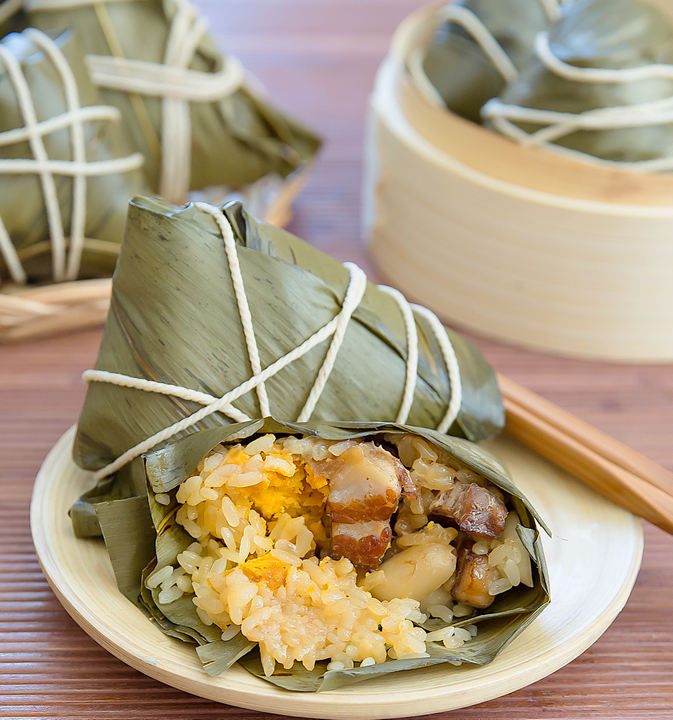
In addition to watching the races, other favorite dragon boat traditions include eating zongzi (sticky rice wrapped in bamboo representing the rice balls that were thrown into the water over 2,000 years ago), balancing eggs at noon and wearing scented sachets that in days past would have been useful for keeping bugs away and preventing the spread of disease.

5/22/17

Smangus: Sacred Trees & Communal Living


We found a 2,700 year old Ent named Yaya (mother) in the middle of Taiwan. The red cypress is the second tallest tree in Taiwan and largest in the ancient grove at Smangus. It would take 24 adults to circle her hand in hand. In total, the grove consists of twenty trees, all of which are over a thousand years old.

The grove resides near the village of Smangus, a little town made of thirty five families in the heart of Taiwan. It’s reported to be Taiwan’s most remote village; located four hours from Taipei up in the mountains, it might be. The only way to access the village is by car or bus and it’s literally over a few rivers, through the woods, up a mountain and across a landslide area. If you plan on making the trip, don’t eat too much before leaving or it might come back up during the last two hours, which is composed entirely of up/down switchbacks.


Far away from civilization, the future of the aboriginal village wasn’t looking good in the early 1990s. At this time, Smangus wasn’t on the map yet and most people had never even heard of it. The great trees hadn’t even been discovered; they were a thing of legend, a story for grandparents to tell their grandchildren. In a last ditch effort to save their community, the village collectively decided to invest in tourism. They started combing the woods, making trails and happened upon the grove of ancient trees, giving the village an accidental gold mine.

With the discovery of the ancient grove and the hiking trails complete, people started to pour in. In the early days of its success, families competed against each other to attract guests and it was very hard on such a small community. Poorer families were getting left behind and outside resort companies were sniffing around for way in. Basically, with its new found success, Smangus found itself in danger of losing itself again and the families came together one more time to form a collective.


Consequently, Smangus is Taiwan’s only example of successful communal living. Today, the cost of labor, expenses and incomes are divided equally between each family. Everything is shared. The system has worked and the village has managed to hang on to its own language, culture and aboriginal identity without losing itself to outside developers. Along with community effort, Smangus also survives on government grants and self-sustaining agriculture practices. The village has its own school, lodge, church and a handful of restaurants.

To preserve the integrity of the environment, Smangus capped the number of visitors allowed in the village each day. They started with 450, but soon reduced that to 250 to make sure the trees don’t suffer from heavy foot traffic. The trail for the ancient grove starts in town and then winds through bamboo forests, scenic overlooks, peach orchards, and mushroom farms. From the village and back, it’s 11 kilometers and takes about five hours to complete.

This isn’t a sweaty ascent hike; it’s just a beautiful walk in the woods and a great way to unwind from the city. There’s plenty of shade and rest stops along the way. Bring your own toilet paper, but you could risk leaving the sunblock at home. As you walk around, enjoy taking big gulps of the mountain air and keep your eyes peeled for Taiwanese pheasants. It’s not uncommon to see them near the trail.

Getting Around


As mentioned previously, the only way to the Smangus is with your own set of wheels, which we don’t have. So, when Taiwan Adventure Outings announced an upcoming trip for the village, we jumped on board. At the risk of sounding like an advert: we had fun, learned a lot, made new friends, bonded over German mind games and introduced the Europeans in our group to the camping tradition of s’mores! Success!

If you have your own set of wheels, you can book everything directly through the village’s website. For accommodation, you can stay in the village or in the new campground that just opened. Pick the campground. It’s in a beautiful spot overlooking the mountains and there’s a connecting path that joins it to the hiking trail.